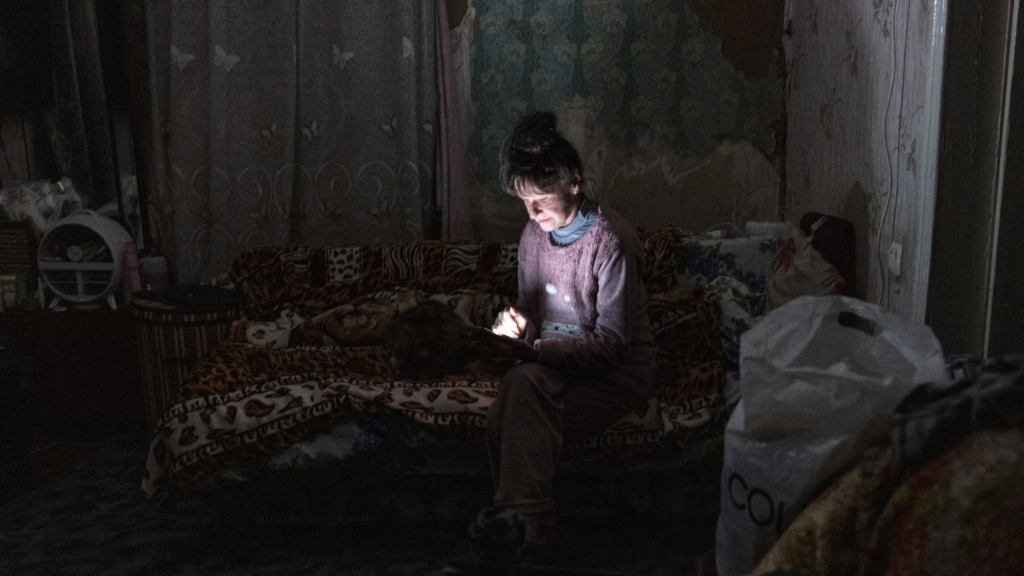
Homeless encampment sweeps have been increasing since a pivotal Supreme Court decision in 2024. But medical experts and advocates for unhoused people say those sweeps have hidden health costs.
AILSA CHANG, HOST:
Nationwide, there has been a push to criminalize homeless encampments. City leaders say the bans protect public health, providing cleaner streets, less trash, better sanitation. But medical experts warn that there are hidden health risks behind those spruced up sidewalks. Lesley McClurg from member station KQED in the Bay Area reports.
LESLEY MCCLURG, BYLINE: A busy corridor in Oakland used to be lined with tents and RVs. Now it’s eerily quiet.
TONY CARROLL: There used to be dozens and dozens of people along here.
MCCLURG: Tony Carroll points down 23rd Street. He’s a community health worker for Alameda County searching for clients he can no longer find. Along the curb, the city has installed a row of concrete bins.
CARROLL: You know, what they’re saying is no parking here.
MCCLURG: The additions are a clear deterrent meant to ensure people don’t come back. This summer, crews demolished wooden structures. They shoveled heaps of garbage into compactors and hauled away vehicles with forklifts.
CARROLL: I don’t know where people are going.
MCCLURG: Sweeps are up after a 2024 Supreme Court ruling allowed cities to ticket or arrest people for sleeping outside, even when shelters are full. Governor Gavin Newsom pushed cities to clear camps.
(SOUNDBITE OF ARCHIVED RECORDING)
GAVIN NEWSOM: It is not human to step over people in the sidewalks and streets. It’s not human to allow people to live three, four, five years in encampments.
MCCLURG: Oakland is conducting far more sweeps now – 132 last July, only 19 the July before. That’s about a sevenfold jump. However, the city told NPR in a statement that it prioritizes outreach over enforcement, with workers offering shelter and connections to other services before any encampment is cleared. But there’s a hidden cost to those freshly cleared blocks. In cities across the country, people lose wheelchairs, canes, even oxygen tanks. They get pushed farther from the clinics and programs they rely on. Research shows the result is missed appointments, lapsed medications, untreated wounds and more trips to the emergency room.
Donald Sims is hunched on a makeshift stool near the cleared encampment in Oakland. He has gray-streaked dreadlocks. Last night, he slept behind a dumpster. He used to sleep in an SUV and store his belongings in a tent on the sidewalk. But then officials warned him they were going to clear the area.
DONALD SIMS: Where – I mean, where are we going to go, if we don’t have nowhere to go?
MCCLURG: He lost everything he owned in about 10 minutes.
SIMS: One officer told me that he wasn’t going to tow my car ’cause I was living in it. And the next thing you know, they came the next day and towed a bunch of cars.
MCCLURG: Along with it, his clothes and toiletries were gone, plus his disability paperwork and the Narcan he kept for emergencies. Sim says he uses fentanyl to cope with PTSD from three gunshot wounds.
SIMS: I’ve been kind of, like, self-medicating. I know that’s not the way to go.
(SOUNDBITE OF VAN DOORS CLOSING)
MCCLURG: Four times a week, Alameda County sends out a medical van. Dr. Aislinn Bird provides psychiatric care for the streets.
AISLINN BIRD: It’s really challenging for our street health teams who would always go to an encampment or place and be able to see their patients and provide care, and now just not knowing where people are.
MCCLURG: She’s especially worried about people struggling with severe mental illness.
BIRD: Schizophrenia, bipolar disorder – and those, if you’re inconsistent with meds or don’t have them, can lead to really dangerous situations.
MCCLURG: Paul Boden saw that first hand. He was unhoused in San Francisco for six years and now leads the Western Regional Advocacy Project. He says sweeps make it feel like everything is OK, but it’s a dangerous illusion.
PAUL BODEN: We don’t have a homeless problem. We have a problem that we can see homeless people. And if we can make it so we don’t see so many of these people, we’ve solved the problem. People get hurt.
MCCLURG: The real solution, he says, is affordable housing and mental health support. For NPR News, I’m Lesley McClurg in San Francisco.
(SOUNDBITE OF TAY IWAR SONG, “REFLECTION STATION”)
Copyright © 2026 NPR. All rights reserved. Visit our website terms of use and permissions pages at www.npr.org for further information.
Accuracy and availability of NPR transcripts may vary. Transcript text may be revised to correct errors or match updates to audio. Audio on npr.org may be edited after its original broadcast or publication. The authoritative record of NPR’s programming is the audio record.