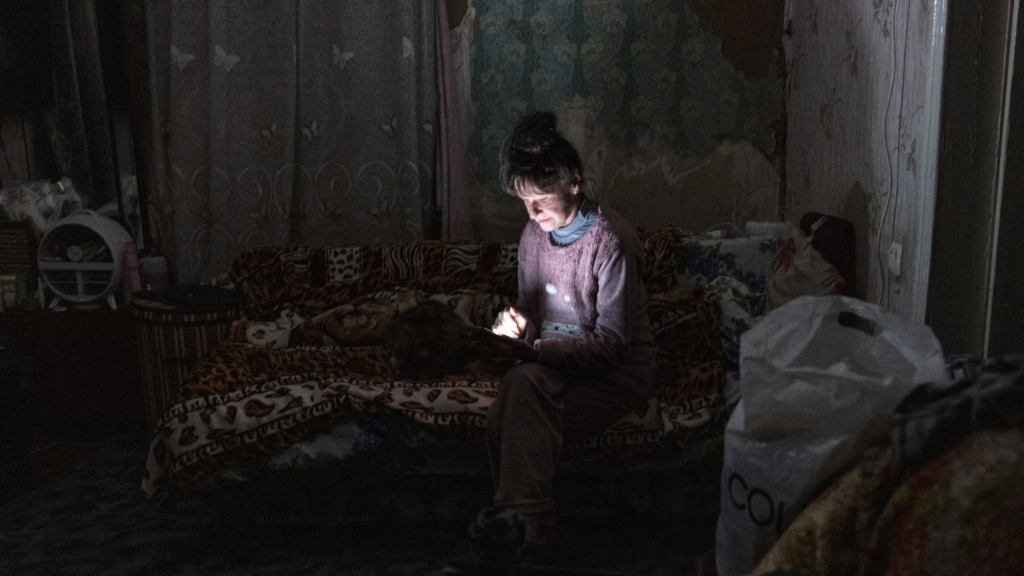
News of black rain falling on Tehran felt all too familiar to Nejat Rahmanian as he scrolled through alerts on social media feeds and tried to contact relatives on March 8.
Israeli drone strikes hit giant oil depots and refineries on the outskirts of the Iranian capital a few hours earlier, setting fuel on fire and releasing columns of black smoke, which mixed with rain clouds that poured toxic chemicals onto the city later in the day.
The descriptions reminded the Iranian researcher of a similar event he experienced in the city 35 years ago. It was surreal, recalled Rahmanian, a professor of chemical and petroleum engineering at the UK’s University of Bradford. Clothes hanging out to dry got stained and the air felt heavy. No one knew why.
Later they learned that some 800 miles away in Kuwait, Iraqi forces battling U.S. and allied forces in the Gulf War had set hundreds of oil wells ablaze. Plumes of soot, hydrocarbons and sulfur dioxide blew over Iran, polluting everything in their path — and accelerating the melting of glaciers in the Himalayas, according to a 2018 study led by Jiamao Zhou at the Chinese Academy of Sciences.
The latest war in the region — which will enter its fourth week Saturday — is unleashing similar pollutants that will have an even greater impact on Tehran and its wider metro area, home to about 18.5 million people, because they were released so nearby, experts say.
“We always see oil facilities being attacked in conflicts,” said Doug Weir, chief executive at the Conflict and Environment Observatory, “but it’s extremely rare for them to be close to a large city like Tehran.”
Weir’s UK-based nonprofit, which aims to raise awareness on the environmental and humanitarian consequences of war, identified more than 300 incidents entailing some environmental risk as a result of the ongoing hostilities, according to the latest available data.
Missiles and bombs contain heavy metals and other toxic pollutants, which are released into the air, soil and water when they explode and crash, lingering often for decades and posing health risks. Cleanup is difficult and expensive.
“A lot of people are exposed to pollution and will continue to be,” Weir said.
The Israeli strike that hit the oil depots outside Tehran has been this war’s single biggest pollution incident so far, he added.
Iranian authorities initially advised residents to stay indoors, warning that acidic rain could cause chemical burns and damage the lungs, according to the UN’s World Health Organization, which made the same recommendation.
Senior Iranian officials and state television later urged people to go outdoors and join state-organized rallies including an annual pro-Palestine march in central Tehran on Friday.
“I would expect acute impacts on respiratory health,” said David J.X. González, an assistant professor at UC Berkeley, who added that young children and pregnant women are especially vulnerable to the air pollutants.
An Iranian engineer, who asked not to be identified because of fear of repercussions, said his relatives were planning to remain in Tehran despite the bombing, but fled to the country’s north. While the military conflict was bearable, the poor air quality and the black rain weren’t.
Already before this war, Tehran was heavily polluted.
Researchers including Rahmanian have detected high levels of fine particulate matter and heavy metals such as lead, cadmium, chromium and nickel in the city’s water and air. They have also found toxic substances that are released when fossil fuels and garbage are burned, such as sulfur dioxide.
A high number of car engines and heavy industries near the city were the main cause, according to Dimitris Kaskaoutis, a physicist at the National Observatory of Athens, who has studied air and dust pollution in the country for more than a decade.
Plumes of smoke from a U.S.-Israeli strike on an oil facility late Saturday linger and merge with the cloudy sky over Tehran, Iran, Sunday, March 8, 2026.
(Vahid Salemi/AP)
Tehran lies at the base of the Alborz mountains. The range blocks air circulation and creates a thermal inversion that traps pollutants, leading to episodes of poor air quality that can last for weeks and even months.
Normally, rain washes the pollution away, but on March 8, it might have made things worse, Kaskaoutis said.
“The combination of the catastrophic oil fires with rainfall makes them much more unhealthy and toxic for human health,” he said. “These pollutants diluted in the water are much more toxic and can easily be absorbed in our bodies — the nervous system, the blood system, and might affect kidneys, liver and other organs.”
With phone and internet communications in Iran cut since the U.S. and Israel began their military campaign on Feb. 28, and without sampling, it’s impossible to know the scale of the pollution.
For now, damage needs to be documented, according to Nazanine Moshiri, an Iranian-born senior advisor on climate and peace at the Berghof Foundation in Berlin. “It’s necessary for accountability and cleanup when the conflict ends,” she said.
Kaskaoutis and Rahmanian said they’re keeping an eye out for further attacks in the region, which is home to some of the world’s largest reserves of oil and gas and is peppered with refineries, depots, processing plants and marine oil and gas platforms, as well as nuclear sites and desalination plants, as the repercussions could be catastrophic.
“It’s stressful,” said Rahmanian, who has relatives in Iran he hasn’t been able to reach for days. “We just don’t know what’s going to happen.”
Millan and Clark write for Bloomberg. Golnar Motevalli and Patrick Sykes of Bloomberg contributed to this report.