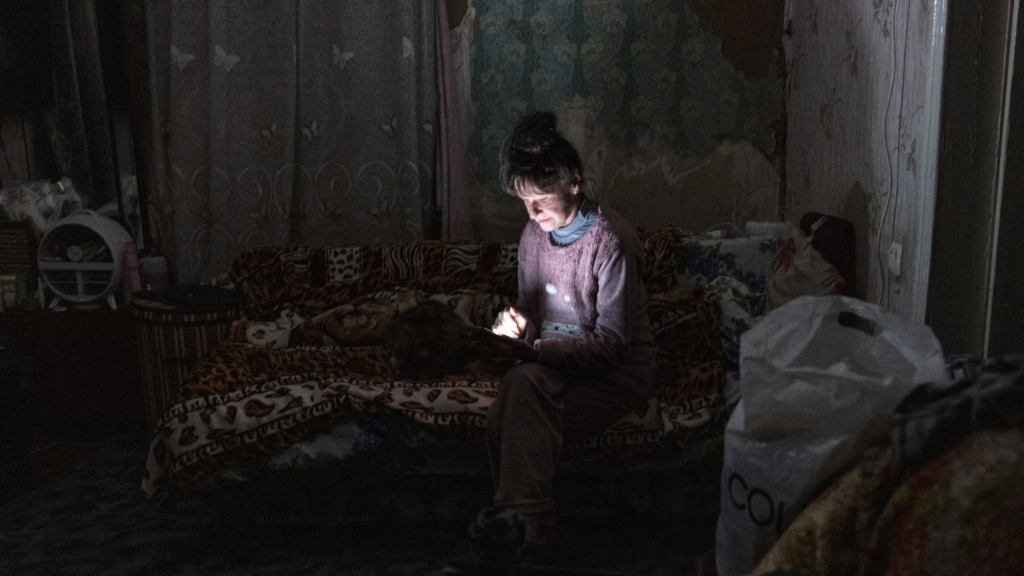
Music tends to stay with people even as dementia claims other memories. In Vermont, Memory Cafes provide communities for both dementia patients and their caregivers.
SCOTT DETROW, HOST:
Dementia can cause people to turn inward and become isolated. Their caregivers can feel lonely and stressed as well. A growing number of social support groups are using music to bring joy and connections to those struggling with memory loss and their caregivers as well. Vermont Public’s Nina Keck has more.
UNIDENTIFIED PERSON: Hey, Jerry. I’m getting your coffee ready.
NINA KECK, BYLINE: It’s late morning, and the downstairs meeting room at St. Luke’s Episcopal Church in Chester, Vermont, is filling up. There’s an easy banter as couples arrive, grab coffee and settle around a large table. Then Martha Mitchell straps on her guitar.
MARTHA MITCHELL: OK, so let’s start with a song. Do we want to start with “Peace In Our Hearts,” which Diane and John taught us?
KECK: The simple song kicks off two hours of music and camaraderie.
MITCHELL: It goes like this.
(Singing) We’re going to…
MARTHA MITCHELL AND UNIDENTIFIED PEOPLE: (Singing) …Walk together arm and arm with peace in our hearts. We’re going to walk together…
KECK: This monthly gathering is what’s known as a memory cafe. They offer support and activities designed for people with dementia and their caregivers. According to the American Music Therapy Association, a growing number are including music. In fact, of the nearly 600 memory cafes listed in Dementia Friendly America’s national database, 100 incorporate music. Diane Holme of Springfield, Vermont, says it’s what brings her and her husband, John, back every month to this group.
DIANE HOLME: Because John enjoys, as you’ve seen, the singing. I enjoy the time we have to share with other caregivers. You don’t have to say much because they know exactly what you’re talking about. And it’s a place where you can be honest.
KECK: John is a retired attorney who says he’s outlived a lot of his friends. Like many people in this group, his memory and mobility problems are getting worse.
JOHN HOLME: The only thing that helps a lot is singing. When we singing with Martha, that really helps because it kind of raises my spirits.
MITCHELL AND UNIDENTIFIED PEOPLE: (Singing) Country roads, take me home to the place I belong. West Virginia, mountain mama.
KECK: John Yaffee agrees. He worked as a nurse before being diagnosed with frontal temporal (ph) and vascular dementia in his late 50s.
JOHN YAFFEE: I feel my heartbeat beating slower, and I just feel so much happier. Like, it brings out the happy hormones in my brain, I’m thinking.
KECK: Yaffee’s right. Music can trigger the release of hormones and neurotransmitters that boost mood, reduce stress and improve emotional wellbeing. For people with dementia, there are even more benefits. Brain imaging shows listening to familiar or meaningful music can strengthen neural connections, particularly in areas that support memory and attention. It’s visceral, says song leader Martha Mitchell.
MITCHELL: Music is phenomenal. It touches the nonphysical part of the body. It gives you access to feelings that you can’t access any other way.
KECK: Like when you hear a favorite song from high school and the words and emotions come flooding back. And Mitchell says, for people with advanced dementia who’ve lost the ability to speak, many can still sing. She points to Jerry Tucker, who comes to this memory cafe with his wife, Deborah. When they arrive, he’s withdrawn and sits with his head down. But by the third song, Jerry’s head comes up. His gaze is more focused. He’s not only singing, he’s smiling, which makes his wife smile.
DEBORAH TUCKER: Oh, yeah, he’ll – he can sing words of all these old songs, but not remember, you know – sometimes forget who I am. (Laughter) You know, it’s just these memory cafes, I love them.
MITCHELL: Here’s the part you know.
(SOUNDBITE OF GUITAR PLAYING)
KECK: The music feels good, she tells me. And being in a place that feels safe and supportive for both her and her husband is huge. For NPR News, I’m Nina Keck in Chittenden, Vermont.
MITCHELL AND UNIDENTIFIED PEOPLE: (Singing) Shadow from the starlight is softer than a lullaby. Rocky Mountain high in Colorado. Rocky Mountain high…
Copyright © 2026 NPR. All rights reserved. Visit our website terms of use and permissions pages at www.npr.org for further information.
Accuracy and availability of NPR transcripts may vary. Transcript text may be revised to correct errors or match updates to audio. Audio on npr.org may be edited after its original broadcast or publication. The authoritative record of NPR’s programming is the audio record.