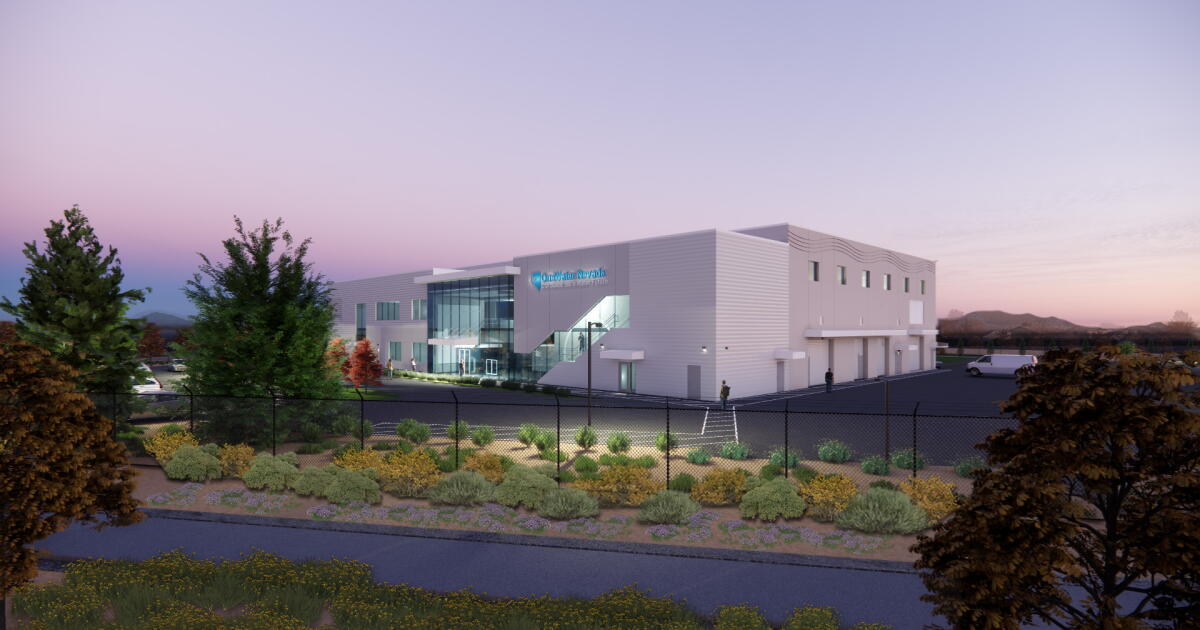
Reno and its community water provider broke ground on a water purification plant that will treat roughly 2 million gallons of wastewater a day, bring it to drinking-water standards and send it into a groundwater aquifer, a first for Nevada.
Once complete, the facility will reduce the region’s reliance on the Truckee River for drinking water and provide more locally controlled water to the city near Lake Tahoe. Construction is expected to continue through the fall of 2029. An on-site education center is planned to open alongside the plant.
“We have a responsibility to make sure we’re prepared for the future,” Reno Mayor Hillary Schieve said.
John Zimmerman, general manager of Truckee Meadows Water Authority, called the project “an outstanding example of what regional cooperation can accomplish.”
The project was funded in part by $128 million in financing from the Nevada Division of Environmental Protection. Other Nevada utilities could follow the same path.
How it works
The new plant will take water from a treatment plant that is treating water to golf course and school field irrigation standards and bring it up to drinking water standards.
Most advanced purified water facilities around the country rely on reverse osmosis, which forces water through an extremely fine membrane to strip out contaminants. But that method produces a concentrated brine. Coastal facilities discharge this waste into the ocean. But inland communities like Reno don’t have that option, so the water authority opted for a different process.
Instead, the plant will use an ozone biological activated carbon process. Rather than filtering contaminants out and concentrating them into waste, this method uses ozone gas and naturally occurring microbes to break contaminants down instead of just isolating them.
Lydia Teel, the authority’s Emerging Water Resources program administrator, said the process also is less expensive to build and operate than reverse osmosis.
From there, the water passes through granular activated carbon, which Teel compared to a large-scale version of a household water filter. Vessels packed with carbon work to trap pharmaceuticals and PFAS, or “forever chemicals.” The final step is ultraviolet disinfection, which uses high-intensity ultraviolet light to kill or inactivate viruses and parasites, such as giardia.
Even after all that treatment, Nevada regulations still require the water to pass through what’s called an “environmental buffer” before it can reach a tap. That means the water will get injected into a groundwater aquifer near Reno’s Stead Airport, where it will sit for years while it filters further before the water authority pumps it back out and into the city’s tap water.
Orange County similarly uses purified wastewater to replenish its groundwater. An upgrade taking place at the Donald C. Tillman Advanced Water Purification Facility in Van Nuys will use this method too.
A flexible new water source
Teel said the facility’s real value is flexibility, a way to lean less on the Truckee River during years when the region can least afford to.
That’s not an abstract concern. This year the snow water equivalent in the Truckee River basin, a measure of how much water the snowpack actually holds, hit its second-lowest level since 1986, and the Truckee Meadows and Lake Tahoe area has been classified as being in a moderate drought by the U.S. Drought Monitor.
The water authority has so far avoided dipping into drought reserves thanks to a network of upstream reservoirs, but officials have acknowledged conditions are trending in the wrong direction as winters grow warmer and snowmelt arrives earlier.
The advanced purified water facility is designed to give the region another option when the river can’t be relied on, whether because of drought, a wildfire fouling water quality or maintenance work elsewhere in the system.
Nevada adopted its indirect potable reuse regulations in 2016, giving the water authority the regulatory framework to pursue the project.
“This permitted project is the current template for permitting future indirect potable reuse facilities” in Nevada, said Krystle Borgman, a spokesperson for the Department of Conservation and Natural Resources.
Heath writes for the Nevada Independent. This story was distributed through a partnership with The Associated Press. The Los Angeles Times contributed.