Star Trek actor William Shatner flew into space on October 13, 2021.
Mario Tama/Getty Images
hide caption
toggle caption
Mario Tama/Getty Images
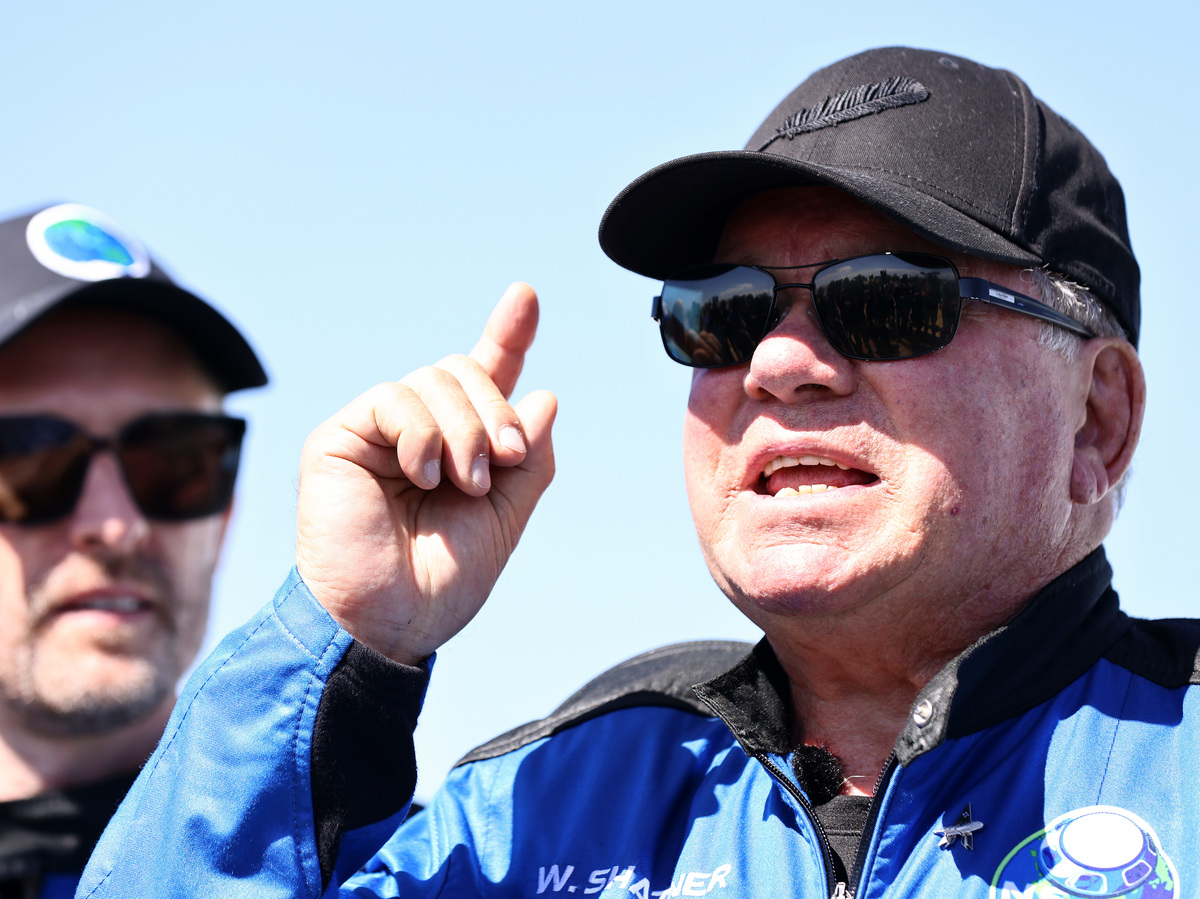
Star Trek actor William Shatner flew into space on October 13, 2021.
Mario Tama/Getty Images
William Shatner is probably the most famous astronaut in the world. But of course, he’s not an astronaut. He’s an actor. The 91-year-old Canadian has been an icon since he played Captain Kirk in the original Star Trek series, which debuted in 1966.
But Captain Kirk, er, William Shatner, did actually go to space — last year, aboard a capsule piloted by Jeff Bezos’s company Blue Origin. Shatner details his experiences in his new memoir Boldly Go.
“I was crying,” Shatner told NPR. “I didn’t know what I was crying about. I had to go off some place and sit down and think, what’s the matter with me? And I realized I was in grief.”

While he wasn’t sure what to expect, Shatner did not predict this. He had been excited to travel to space, and had thought about it for nearly 60 years, but didn’t think he’d be overwhelmed with sadness, or that he’d go through “the strongest feelings of grief” that he’s ever experienced.
There’s a name for what Shatner felt: it’s called the “overview effect.” The term was coined by space philosopher Frank White in his 1987 book of the same name.
“The overview effect is a cognitive and emotional shift in a person’s awareness, their consciousness and their identity when they see the Earth from space,” White told NPR. “They’re at a distance and they’re seeing the Earth … in the context of the universe.”

The overview effect is known to affect astronauts.
NASA/Getty Images
hide caption
toggle caption
NASA/Getty Images
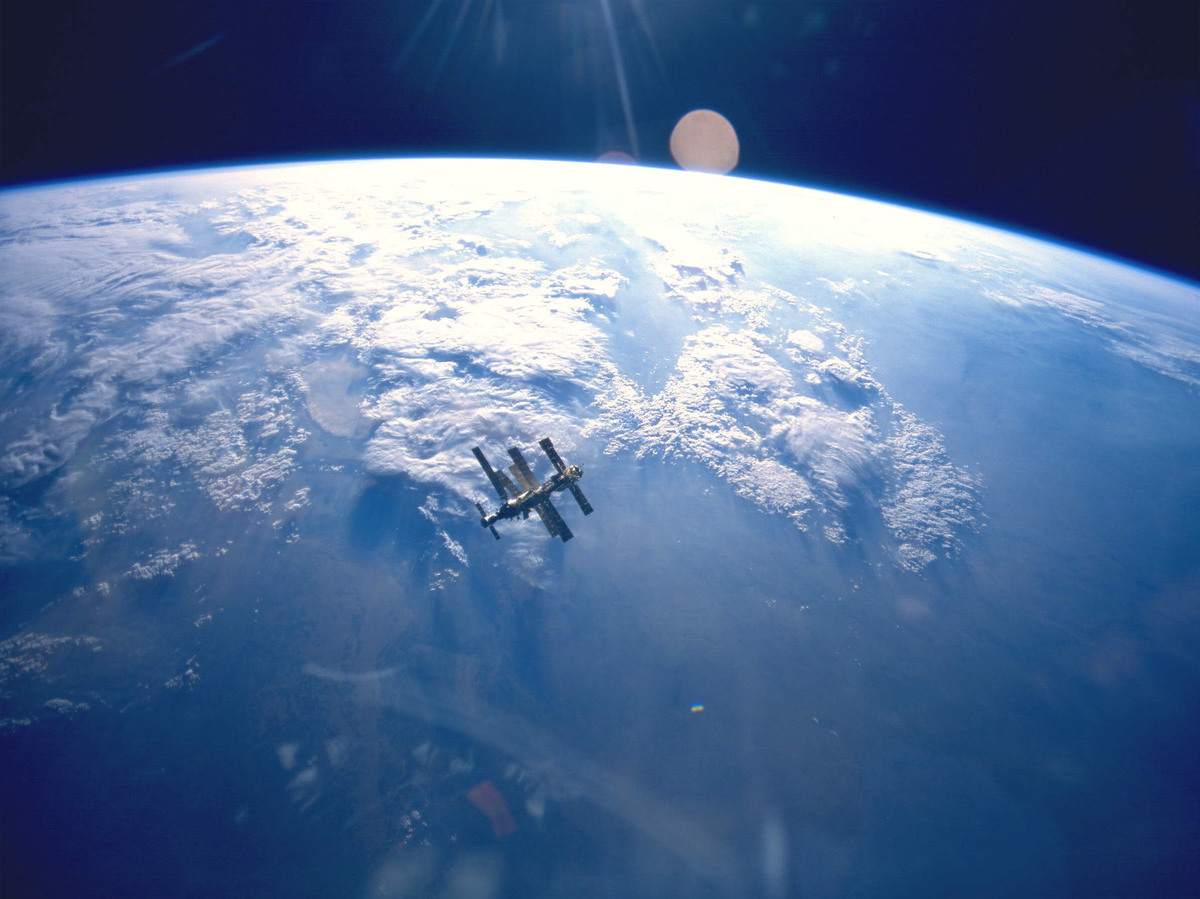
The overview effect is known to affect astronauts.
NASA/Getty Images
This context was what struck Shatner the most.
“It was the death that I saw in space and the lifeforce that I saw coming from the planet — the blue, the beige and the white,” he said. “And I realized one was death and the other was life.”
According to White, everyone who travels to space experiences an “overview effect” — an emotional or mental reaction strong enough to disrupt that person’s previous assumptions about humanity, Earth, and/or the cosmos. Everyone’s overview effect is unique to them, but there are reactions that are more common than others.
White has interviewed more than 40 astronauts, and says that Shatner’s response is typical. “People often cry when they first see the Earth from space,” he said.
“I wept for the Earth because I realized it’s dying,” Shatner said. “I dedicated my book, Boldly Go, to my great-grandchild, who’s three now — coming three — and in the dedication, say it’s them, those youngsters, who are going to reap what we have sown in terms of the destruction of the Earth.”
Astronauts often return with a greater distaste for war
After traveling to space, astronauts gain a greater understanding of how precious, and delicate, the Earth is. Many astronauts report that they were aware of climate change and global warming, but they became much more sensitive to the subject after traveling to space.
White said that one astronaut told him that the biggest lesson they learned from space travel was “the difference between intellectual knowledge and experiential knowledge.”
“I saw more clearly than I have, with all the studying and reading I’ve done, the writhing, slow death of Earth and we on it,” Shatner said.
“It’s a little tiny rock with an onion skin air around it. That’s how fragile it all is. It’s so fragile. We hang by a thread … we’re just dangling.”

The New Shepard rocket launched on October 13, 2021 with Shatner on board.
Patrick T. Fallon/AFP via Getty Images
hide caption
toggle caption
Patrick T. Fallon/AFP via Getty Images
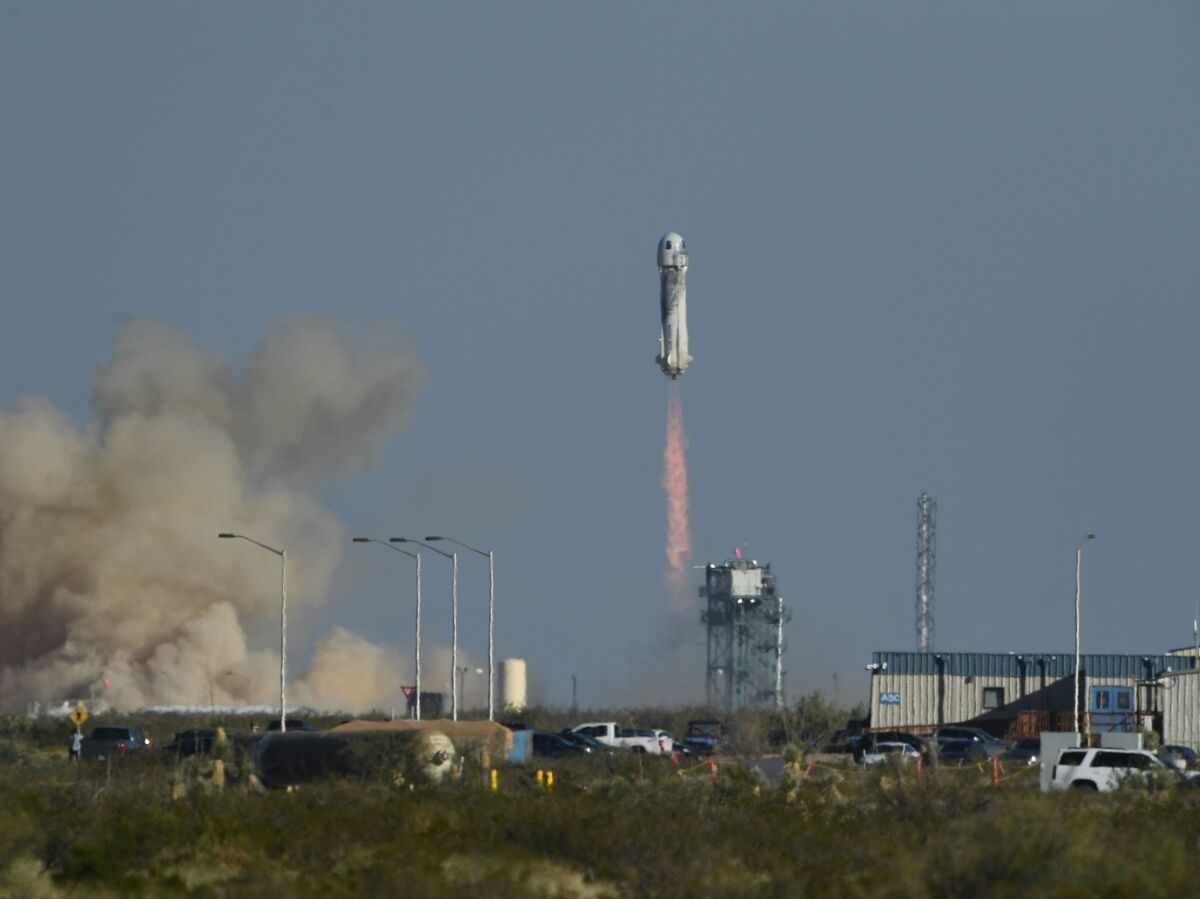
The New Shepard rocket launched on October 13, 2021 with Shatner on board.
Patrick T. Fallon/AFP via Getty Images
Although we are just dangling, Shatner adds that we’re dangling together.
“We’re entangled with each other,” he said, decrying conflicts between human beings. “We have a war … the stupidity of it all is so obvious.”
Like Shatner, astronauts often return from space more convinced of the interconnectedness of humanity. According to White, space travelers return to our planet with “a greater distaste for war and violence, and a desire to do something to improve life back on the surface, because they’ve seen the truth of our situation.”
And although the truth may not be pretty, a more universal perspective can only aid in reconnecting our long disconnected species. White says that astronauts return more eager than ever to be part of the solution, so that humanity may, one day, live long and prosper.