Last week, Hurricane Erin became the first major hurricane of the 2025 season, peaking as a Category 5 storm and leading to 12 deaths.
Erin’s erratic nature, highlighted by its ability to intensify greatly in a 24-hour period, further showed how climate change is complicating already existing weather systems.
The science communication nonprofit Climate Central estimated that human-caused climate change made the warm water temperature around where Erin formed 90% more likely — a key ingredient for hurricane formation — according to the New York Times.
Diminished wetlands across the Eastern U.S. and Gulf coasts have further increased danger because these habitats create a natural physical barrier that reduces storm surge flooding.
These climate-related challenges often end up most greatly affecting minority communities in the U.S.
“Communities of color often face disproportionate health risks linked to cumulative exposures to environmental hazards (e.g., air pollution, traffic, contaminated water) and may be more vulnerable to the health effects associated with climate-related impacts due to racialized health and socioeconomic disparities unrelated to climate, such as systematic disinvestment in access to quality housing, education, and food,” a National Institutes of Health study found.
Hurricane Katrina
This Friday marks exactly 20 years since Hurricane Katrina hit the Gulf Coast.
According to the National Oceanic and Atmospheric Administration, 1,836 deaths can be attributed to the fatal storm, with the bulk of those deaths taking place in Louisiana.
Levee breaches left 80% of New Orleans flooded. Damages were estimated to cost $125 billion (making it the costliest hurricane in U.S. history at the time), and a whopping 1.5 million people were displaced as a result of Katrina. To this day, hundreds of people are still classified as missing.
Two decades later, the impacted areas are still recovering from the natural, infrastructural and political disaster that disproportionately affected the area’s Black population.
A September 2005 national Pew Research Center poll showed that two-thirds of Black people surveyed believed the government’s response to the situation would have been faster if most of the victims had been white. A 2015 Kaiser Family Foundation/NPR poll found that only 44% of Black New Orleans residents believed that the city had mostly recovered from Katrina.
Following the wrath of the Katrina, Jorge Vitanza — the vice consul of Honduras in New Orleans at the time of the storm — spoke of the impact on the more than 100,000 Hondurans in Louisiana.
He noted that many Hondurans feared staying at shelters during and after the hurricane due to their immigration status.
“We have talked to some of them, and they’re going at night and sleeping and coming out in the morning, early in the morning, because they are afraid that they … are going to be deported, which is not true,” Vitanza told Democracy Now! 20 years ago. “There’s a lot of people that have left the shelters because somebody came and told them that immigration were looking for them and there were border patrols here. And so, they left. A lot of them.”
A 2006 report by UC Berkeley School of Law found that 45% of construction workers who helped rebuild New Orleans post-Katrina were Latinx, with more than half of them identifying as undocumented. Mexicans and Hondurans made up the largest percentage of the undocumented workforce at 43% and 32%, respectively. That influx of Latinx workers into New Orleans led to a 71% growth of the city’s Latinx population from 2000 to 2013, NOLA.com reported.
In 2015, NBC News reported that many of the Latinx laborers — who often worked 12-hour days and were exposed to dangerous substances as they helped rebuild New Orleans — were victims of wage theft, with 55% of surveyed workers claiming they were never paid for overtime labor.
Newsletter
You’re reading Latinx Files
Fidel Martinez delves into the latest stories that capture the multitudes within the American Latinx community.
You may occasionally receive promotional content from the Los Angeles Times.
Hurricane Harvey
On Aug. 26, 2017, Hurricane Harvey made landfall near the Texas Gulf Coast after sweeping through parts of the Caribbean, Central America and Mexico.
The storm wreaked havoc in the Greater Houston area of the Lone Star State, resulting in damages that tied with Hurricane Katrina as the costliest U.S. hurricane on record at $125 billion. More devastatingly, the hurricane led to the death of 107 people in the affected states, with 103 storm-related death recorded in Texas. Additionally, tens of thousands of people required rescuing and an estimated 30,000 people were displaced.
A 2022 study by the journal of Nature Communications revealed that the Latinx community was most affected by Harvey.
“Climate change-attributed impacts were particularly felt in Latina/x/o neighborhoods, and especially so in Latina/x/o neighborhoods that were low-income and among those located outside of FEMA’s 100-year floodplain,” the study reads.
A 2019 Environmental Research study found that “Hispanics, non-Hispanic blacks and non-Hispanic other racial minorities experienced statistically significantly greater flood extent than non-Hispanic whites.” It concluded that flooding was distributed “inequitably with respect to race/ethnicity.”
Additionally, the U.S. Department of Housing and Urban Development found in 2022 that communities of color were discriminated against when the Texas General Land Office denied more than $1 billion in federal relief funds to help hard-hit areas recover from Hurricane Harvey.
The HUD report said that the Texas GLO “discriminated on the basis of race and national origin,” that Black and Hispanic residents were “substantially disadvantaged” and that the Civil Rights Act was not being properly followed.
Eight years after Harvey, some families are still awaiting federal funds to rebuild their homes, with many stuck in a bureaucratic cycle of delay.
Houston resident Jackie Williams told ABC13 that the Texas GLO has continually delayed repairs for her home.
“Maybe once a month, possibly twice telling us, why the project can’t go farther,” Williams said.
With the start of the second Trump administration, HUD rescinded its aforementioned referral to further investigate the practices of the Texas GLO, according to ProPublica.
The Texas Gulf Coast city Rockport has gone eight years without a functioning physical location for its courthouse, the Texas Tribune recently reported.
“We’re near the finish line and look hopeful to be in that building here soon,” Judge Ray Garza — a judge in Aransas County where Rockport is located — said at a recent county commissioners meeting
The courthouse rebuild has been exceedingly costly for the county, which owes at least $13.3 million in bonds. The county is also caught in litigation with the architectural and construction companies in charge of the rebuild.
Hurricane Maria
The Category 4 Hurricane Maria hit Puerto Rico on Sept. 20, 2017, and killed somewhere between 3,000 and 4,700 people on the island. Maria made landfall just two weeks after Hurricane Irma caused over two-thirds of the island to lose power.
The federal response to Maria was insufficient (despite what some public officials may have said), leading to long-standing problems in Puerto Rico that are still plaguing the island. In the year after the back-to-back hurricanes, the population of Puerto Rico dropped by a record 3.9%, according to Pew. (The study also says that from 2017 to 2018, 123,000 more people left than moved to Puerto Rico.)
A 2021 HUD report revealed that the first Trump administration obstructed an investigation looking into why officials withheld about $20 billion in Puerto Rican hurricane relief following Maria.
One organization that did step in to provide on-the-ground aid to Puerto Ricans was the Hispanic Federation, a nongovernmental/nonprofit Latinx community advocacy operation.
Charlotte Gossett Navarro, the Puerto Rico chief director for the Hispanic Federation, has led the project’s long-term recovery efforts on the island since Maria hit in 2017.
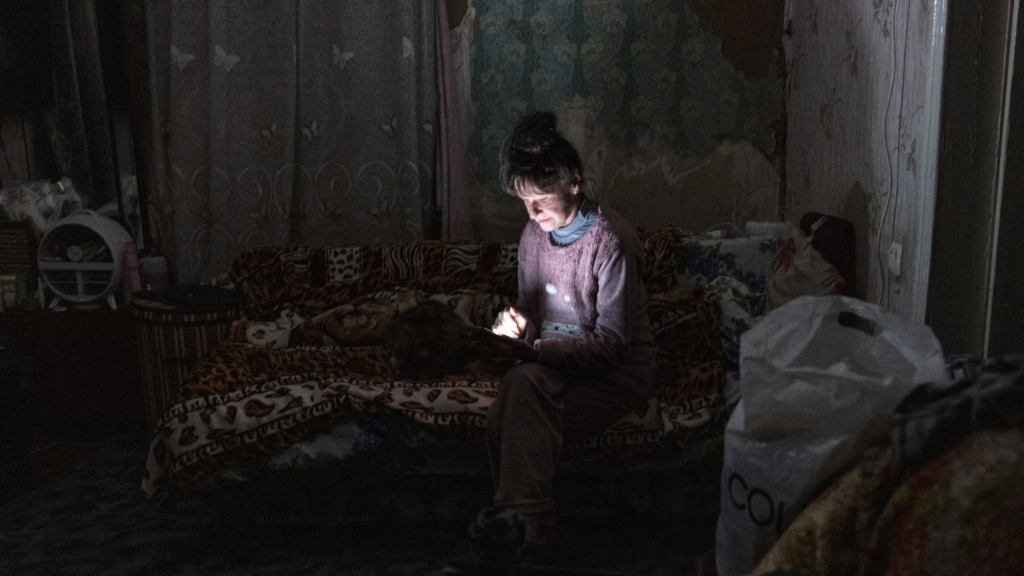
“One of the most difficult parts of recovery that really affects day-to-day life is our electric grid, and the fact that our electric grid has not recovered to provide stable energy here…,” Navarro told The Times. “We are the jurisdiction in the U.S. that goes the longest without power every year … because our system doesn’t generate enough power for our demand and so the Power Authority intentionally turns off the power to certain sectors.
She noted that these blackouts often come without warning and usually last anywhere between six and 12 hours.
“[Puerto Rico] has the most expensive energy in the U.S. and some of the least reliable energy, and it affects our economy,” Navarro continued. “Small businesses are constantly needing to close their doors. It increases costs with things like having to buy generators and diesel or invest in other systems because the grid can’t be trusted.”
This also means that residents are constantly losing food because of a lack of proper refrigeration if they can’t afford a backup generator — which many can’t due to the island’s 40% poverty rate.
Part of the reason Puerto Rico has been unable to recover from Maria has to do with the circumstances on the island before and after the storm.
Before Maria, Puerto Rico was in a process of bankruptcy and was making a series of political decisions toward austerity before Hurricane Maria hit. In late 2019 and early 2020, the island was hit by substantial earthquakes and, almost immediately after that, the COVID-19 pandemic. Then, in 2022, Hurricane Fiona made landfall in Puerto Rico, which caused billions of dollars in damage and left hundreds of thousands without water. This August, as climate change continues to intensify weather systems, Puerto Ricans are facing ongoing extreme-heat events.
“There’s this real human impact on the fact that our infrastructure has still not recovered,” Navarro said. “We are supposed to transition to 100% renewable energy in Puerto Rico by 2050, but with the change at governor and at the federal level … those new leaders have a very different view on renewable energy.”
She noted that her organization was supposed to receive a fund through congressional allocation that would provide solar energy to healthcare centers so that they could continue functioning during the many power outages, but that funding has since been reallocated toward more diesel and fossil fuel.
“There was also a lot of funding that was supposed to come in from the Inflation Reduction Act that has now been rescinded from many of the organizations that we work with, who were working on projects related to recovery for the agriculture sector,” Navarro said.
The news from the island isn’t all doom and gloom, though, as Navarro pointed out. The Department of Energy’s Programa Acceso Solar will provide small solar energy systems for the homes of primarily people with disabilities or medical dependencies who lived in the last communities to be reconnected to the electrical grid.
“Hopefully in future disasters, [these people will] not have to worry about spoiling their medication, not being able to get their dialysis, not being able to to continue their treatment, and that their life is at risk, or that the life of their child or their parents is at risk, which are the stories we heard over and over again,” Navarro said.
But there was one thing that Navarro believes is most needed from everyday people living outside of Puerto Rico.
“I think what we need is awareness, where people become aware of the inequities that Puerto Rico has historically faced, [and] that we currently face, from the U.S.,” Navarro said. “And that they support us in advocating for equity for Puerto Rico, particularly from the U.S. government toward Puerto Rico.”
Long live the Latinx goths of L.A.
(Luke Johnson / Los Angeles Times)
The Times’ summer intern Katerina Portela wrote about the pierced and painted experience of the Lucha Goth Haus — a recurring variety show in which the iconic Mexican sport of lucha libre meets the sounds of dark wave and industrial music.
The article also examines the long-observed relationship between the goth and Latinx cultures in the U.S.
I think this quote from Portela’s piece best captures the vibes: “I wouldn’t say Latinos are ‘taking over’ the goth scene in L.A.,” said Francisco Saenz, drummer for L.A. post-punk band Deceits. “I would say we are the scene.”
Stories we read this week that we think you should read
Unless otherwise noted, all stories in this section are from the L.A. Times.
Immigration and the border
Education
- Hundreds of thousands fewer students, but few closed schools. Can LAUSD make the math work?
- Students are missing a lot more school. Why chronic absenteeism may be here to stay
- Justice Dept. declines to defend grants for Hispanic-serving colleges, calling them unconstitutional (AP)
Arts and Entertainment
More hurricane retrospectives
- Hurricane Katrina survivors describe how it changed their lives 20 years on (El País)
- Eight Years Later: Remembering Hurricane Harvey’s impact on the Texas Coast (KSAT)

(Jackie Rivera / For The Times; Martina Ibáñez-Baldor / Los Angeles Times)