Pain.
The pyrotechnics behind the net that greeted Ngan Thi Van Su‘s opening goal for Vietnam in the 30th minute had this writer claiming that it was an allegory for India‘s dreams going up in smoke. In that moment, Vietnam looked every bit like a team 31 places above India in the FIFA rankings, and the hopes were of limiting the damage more than anything.
Except Amelia Valverde and her Indian women’s football team didn’t get the memo. India fought back in the second half, and substitute Sanfida Nongrum’s dream goal on debut looked to have earned a creditable 1-1 draw.
And then in injury time, the white smoke went up behind the net again. Van Su again. India’s dreams gone up in smoke, again.
Pain.
In the immediate aftermath of the game, Vietnam were probably deserved winners, but India having come so close, having done all the right things to fight back would rankle coach Valverde no end.
*****
The Costa Rican, understandably, opted to go with much of the Indian team that qualified for the competition, using a lineup not too dissimilar to that of Crispin Chettri. Dangmei Grace led the line, with Pyari Xaxa behind her and Manisha Kalyan and Soumya Gugoloth occupied the wings.
Vietnam’s legendary coach, Mai Duc Chung opted for a now trademark 5-4-1 that turned into a fluid free-for-all on the pitch. And India were left chasing shadows.
Nguyen Thi Bích Thùy, a midfielder by trade, started as Vietnam’s centre-forward, but moved all across the backline, bending her runs superbly. A proper nuisance of a forward, Bich Thuy’s runs constantly troubled the Indian backline, and it helped that she had Vietnam’s best supporting her.
Huynh Nhu, Vietnam’s all-time top-scorer started off the left but would drift into the middle as well, and her trickery and vision left her Indian markers befuddled. One particular pass took out five Indian defenders converging on her, and sent Thuy through on goal, only for Panthoi Chanu in the Indian goal to come out sharply to smother the ball.
India looked a little punch-drunk, but on the sidelines, Valverde kept her charges’ heads up – with constant tactical changes. Xaxa moved up, Grace dropped back, but it did little to stem the flow. And then, in the 30th minute, Vietnam had their breakthrough.
It started, as so many of their moves did, with Bich Thuy bending her run to receive an aerial ball forward as she drifted between India’s centre-backs and managed an excellent layoff. Thái Thi Thao‘s poor touch in response looked to have killed the move, but the ball drifted forward into the box and Van Su ran onto the ball and played an opportunistic first-time shot that curled past Panthoi into the net.
Vietnam had their opener… surely the floodgates would open now?
In 2023, in the Olympic qualifiers, India had crumbled against this Vietnamese team, going on to concede another two goals.
India’s response in 2026, is why despite the result, the dream of achieving something in this AFC Asian Cup is still alive. Circling the drain sure, but still alive.
Valverde diagnosed India’s problem immediately – Manisha was moved into the middle to use her physical advantage and hold the ball up, and all off a sudden India had a foothold.
It almost paid immediate dividends, as just before half-time Manisha did well to hold the ball, execute a lovely Cruyff turn to evade her marker and then pull off a brilliant trivela pass with her left foot to send a through ball to Soumya. The winger’s touch was heavy, and that killed the move, but India’s hope suddenly sprung to life.
At half-time, Valverde made two very brave calls – off came Grace and Soumya, two stalwarts of the Chettri reign, and on came internationally inexperienced, but extremely hungry Rimpa Haldar, and debutant Sanfida Nongrum. The latter had already created history by becoming the first footballer from Meghalaya to be called up to the national team, and Valverde – who had only seen these players for a couple of months – had no issues in throwing this particular 20-year-old on.
An international debut in arguably the biggest game any Indian women footballer has played in the last decade or more, with India needing midfield control and a route back into the game. One could forgive Sanfida if she chose to hide, but instead the Garhwal United captain grabbed the game by the scruff of the neck. Seven minutes into her debut, a clearance from Duong Thi Van floated into the path of Sanfida, and she ran into the box ahead of chasing Vietnamese defenders.
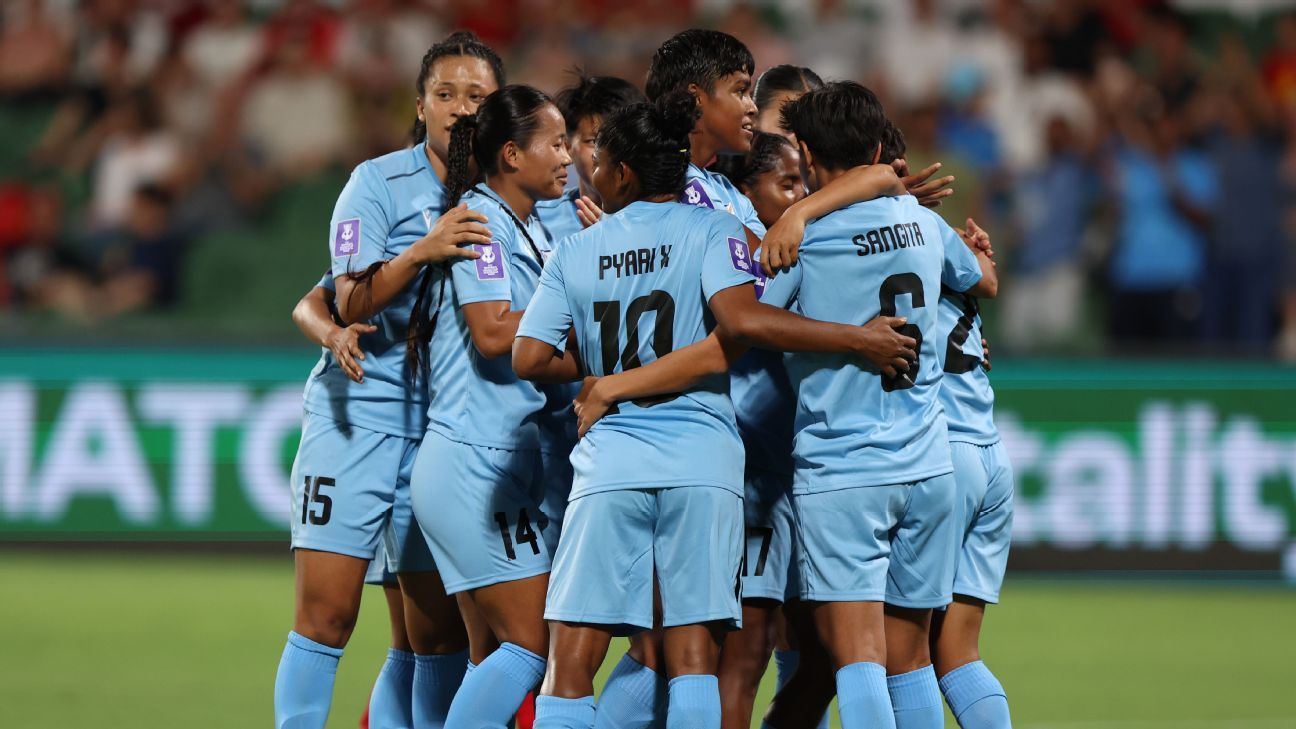
Again, this was a 20-year-old making her international debut – we’ve seen experienced Indian forwards snatch at such chances. This midfielder took her time, and calmly curled the ball into the net, even if Kim Thahn in the Vietnamese net got a hand to it. 52 minutes into the game, India had a result that could throw Group C wide open.
All of a sudden, the FIFA Women’s World Cup looked closer, Chinese Taipei a very beatable opponent if India could pull off a result against Vietnam.
Even when Vietnam saw a goal ruled out for offside after a goalmouth scramble, it appeared the footballing gods were with the Blue Tigresses. India’s increasing control in midfield even raised hopes of a win, with Manisha excelling in her false nine role, with Xaxa, Rimpa and Sanfida full of running.
As the game crept to the end, India dreamt smaller, a draw now an excellent result as Vietnam ramped up the pressure. Valverde perhaps made her first mistake of the game, taking off Manisha in injury time and replacing her with the diminutive Lynda Kom. A panicked clearance was launched forward, and while Manisha would have won that aerial duel, Lynda could not.
Vietnam recycled the ball and eventually moved it wide. Vu Thi Hoa ran onto a long pass, worked a yard of space, and sent in a perfect low cross. Up popped Van Su in the middle of the box, and she calmly turned it through Martina Thokchom‘s legs and into the net. India were 180 seconds away from dreaming big dreams, but the cold, hard reality of football hit them squarely in the face.
Pain.
That would be the overwhelming emotion of the blue shirts lying on the floor of the Perth Rectangular Stadium as the final whistle blew. And yet, with their second half performance, India offered just about enough for that pain to come attached to some hope.
Hope, not a word associated with any Indian football team of late, but these group of 26 players still have it in their hands. The white smoke may have emanated from behind the net, but India aren’t surrendering anytime soon.