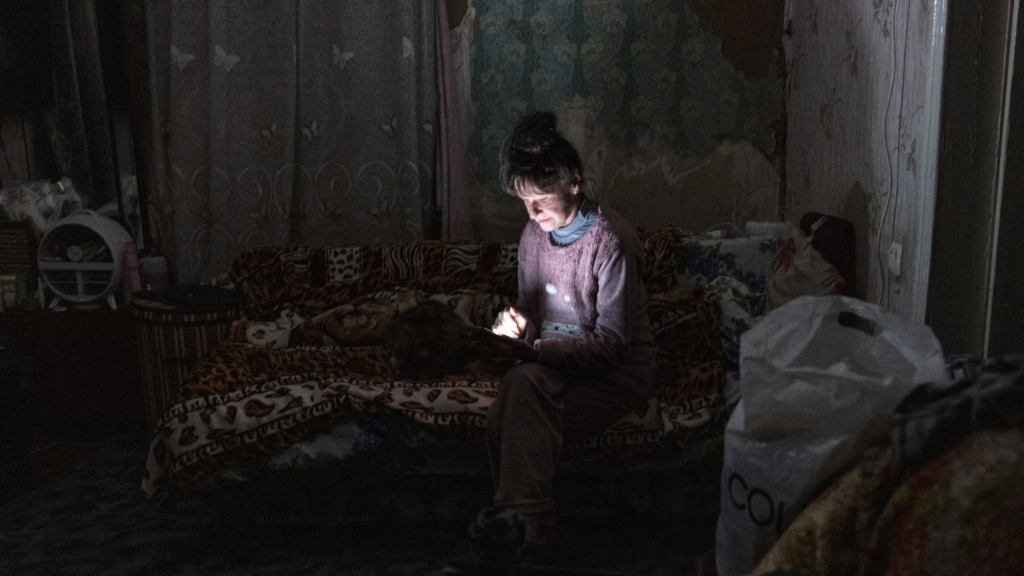
A woman born in Colorado has never had a birth certificate; her parents rejected such things. She’s never gone to school, had a job or been on a plane. Revised rules mean she’ll soon officially exist.
AILSA CHANG, HOST:
Without a valid ID, you cannot enroll in school or work legally or drive a car or get on a plane. And to get that identification, you often need a birth certificate. So what if you never had one of those? Colorado Public Radio’s Dan Boyce reports.
DAN BOYCE, BYLINE: Abigail McKinnon says she was born on December 8, 1994.
ABIGAIL MCKINNON: I was born in Woodland Park, Colorado.
BOYCE: To deeply religious parents who didn’t believe in registering their children with the government at all.
MCKINNON: They believe that a Social Security number was the mark of the beast, so that’s why I was never gotten a Social Security number.
BOYCE: She and her siblings were homeschooled, never went to doctors or dentists. It wasn’t until she was a teenager that she realized what not having a birth certificate meant. She wanted to get a driver’s license, join the military, take online classes. She couldn’t do any of that.
MCKINNON: I was denied because I didn’t have any proof of identification.
BOYCE: McKinnon’s siblings were initially in her same position, but they were all able to eventually get birth certificates, social security numbers and education, regular jobs, move on with their lives.
MCKINNON: All of them.
BOYCE: That’s because they were born in Tennessee, where regulations are less strict. Kelley Wright has been in the same boat. Her parents never fully explained why her birth in Loveland, Colorado, wasn’t registered.
KELLEY WRIGHT: When I was born, it was at home via midwife, and I’ve heard that maybe they didn’t want to pay the midwife or that the midwife was mad. So I guess she never signed the papers.
BOYCE: Immigration attorney Betsy Fisher says there’s no reliable data on how many Americans find themselves in a similar situation. Fisher teaches law at the University of Michigan and writes about delayed birth certificate laws in the United States. They vary state by state.
BETSY FISHER: So there’s a huge range, but I do think Colorado has some unusually strict laws for kids who aren’t registered in their first few years of life.
BOYCE: What makes Colorado stand out is it’s the only state requiring an official government document created in the first 10 years of a child’s life without exceptions.
FISHER: It’s extremely harsh because if you just don’t have that and – you know, no one’s responsible for generating their own documentation when they’re 10 years old.
BOYCE: Abigail McKinnon is 31 now and has applied for a birth certificate multiple times for half of her life now. She’s been denied every time. While she was able to procure some documents from other states when she was in her teens and 20s, she doesn’t have anything from the first decade of life. So McKinnon sued. Her lawyer is Casey Sherman with the nonprofit Colorado Legal Services.
CASEY SHERMAN: Abigail can’t participate in modern life. She legally doesn’t exist.
BOYCE: State officials stress rules for delayed birth certificates need to walk a fine line.
NED CALONGE: The best balance between risk of fraud versus assuring people who deserve a birth certificate get one.
BOYCE: That’s Colorado Chief Medical Officer Ned Calonge. Nevertheless, McKinnon’s lawsuit led Colorado to revise its regulations. New rules go into effect in March that will permit officials to accept more recent documents. They should allow McKinnon to prove her citizenship and, after 31 years, to finally officially exist. For NPR News, I’m Dan Boyce in Colorado Springs.
(SOUNDBITE OF MUSIC)
Copyright © 2026 NPR. All rights reserved. Visit our website terms of use and permissions pages at www.npr.org for further information.
Accuracy and availability of NPR transcripts may vary. Transcript text may be revised to correct errors or match updates to audio. Audio on npr.org may be edited after its original broadcast or publication. The authoritative record of NPR’s programming is the audio record.