From left to right: Brayan Vazquez, Karen Perez and Adam Modzelewski recently became U.S. citizens at a naturalization ceremony in Phoenix.
Grace Widyatmadja/NPR
hide caption
toggle caption
Grace Widyatmadja/NPR
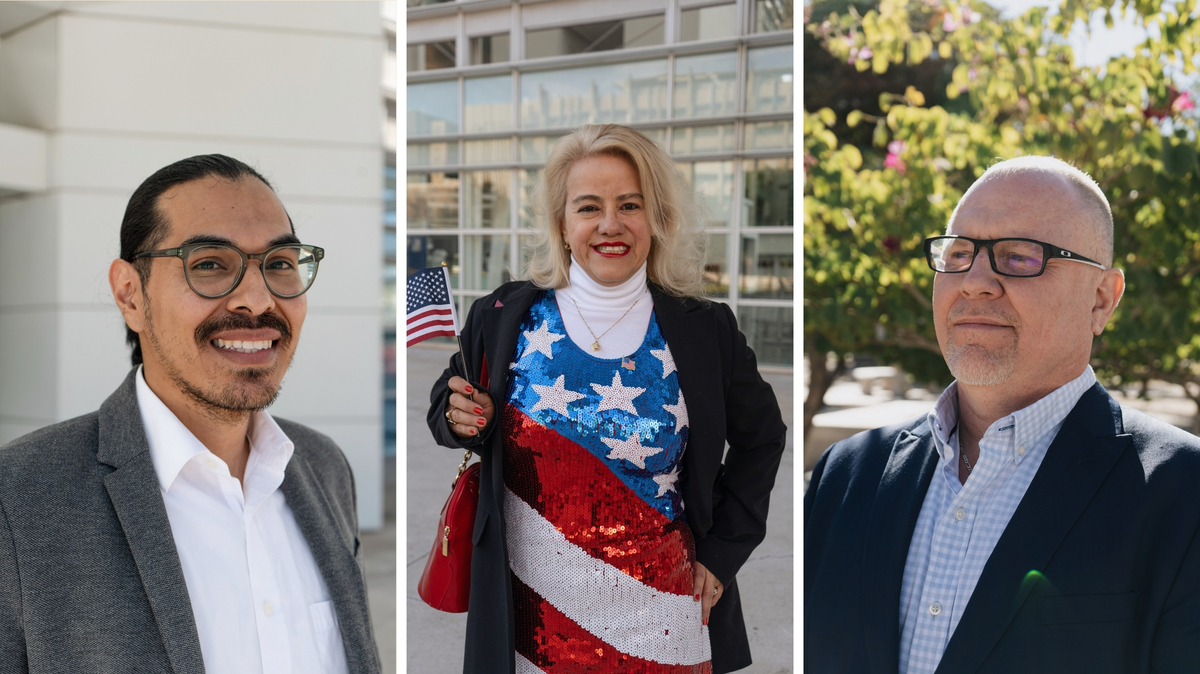
From left to right: Brayan Vazquez, Karen Perez and Adam Modzelewski recently became U.S. citizens at a naturalization ceremony in Phoenix.
Grace Widyatmadja/NPR
PHOENIX — It was a very proud moment for Nilesh Patel.
“It’s the happiest day of my life,” he said, walking out of the Sandra Day O’Connor U.S. Courthouse in Phoenix earlier this month.
Patel, who emigrated from India nearly a decade ago, had just finished participating in a naturalization ceremony — officially making him an American citizen. And after the ceremony, down the hall from the courtroom, he was able to register to vote.
“[The] U.S. has given a lot to us,” said Patel’s wife, Hatel Patel, who is already a citizen. “I’ve been serving back, now he will get more chances as well.”
And serving back, she says, means voting.
New Arizona voters like Nilesh Patel are registering in a state that next year has key congressional races and could play a crucial role in the presidential election. And many new voters see their eligibility to participate in elections as an impactful and exciting responsibility.

Nilesh Patel and his wife Hatel Patel stand for a portrait outside the Sandra Day O’Connor U.S. Courthouse in Phoenix after a naturalization ceremony on Dec. 15.
Grace Widyatmadja/NPR
hide caption
toggle caption
Grace Widyatmadja/NPR
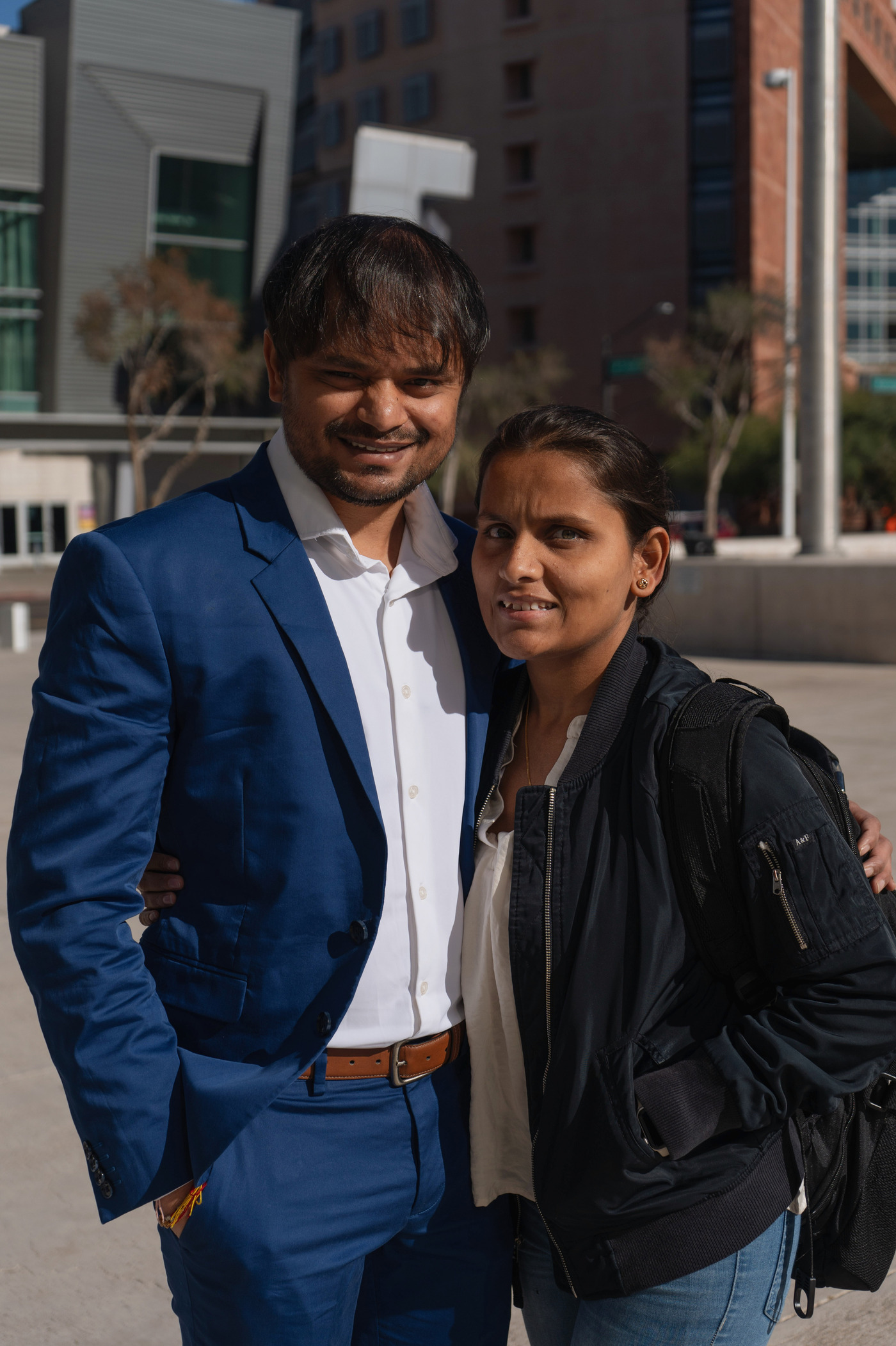
Nilesh Patel and his wife Hatel Patel stand for a portrait outside the Sandra Day O’Connor U.S. Courthouse in Phoenix after a naturalization ceremony on Dec. 15.
Grace Widyatmadja/NPR
“One of our greatest rights, especially for new citizens, is the power to vote,” said Jeanette Senecal with the nonprofit League of Women Voters, which has reported registering nearly 48,000 new citizens to vote this year at naturalization ceremonies around the country.
In fiscal year 2022, nearly 1 million Americans became naturalized citizens, according to federal data — the highest level in 15 years.
“We want to see every eligible voter registered and turning out to vote,” Senecal said, adding, “It is really important to invite new voices in to ensure we have a representative democracy.”
But becoming a coveted voting bloc that political campaigns seek out is a different step.
“The [likelihood] of a campaign spending money to target [new citizens] and get them to vote is low,” said Arizona Democratic strategist Tony Valdovinos, who’s a recipient of the federal Deferred Action for Childhood Arrivals program.
He told NPR it often takes years to go from being a registered voter to a reliable voter that campaigns target.
NPR attended two recent naturalization ceremonies in Phoenix and spoke with new citizens and their families about what it means to them to be able to vote. Here are their responses.

Karen Perez, who is from Venezuela, waves an American flag after the naturalization ceremony.
Grace Widyatmadja/NPR
hide caption
toggle caption
Grace Widyatmadja/NPR
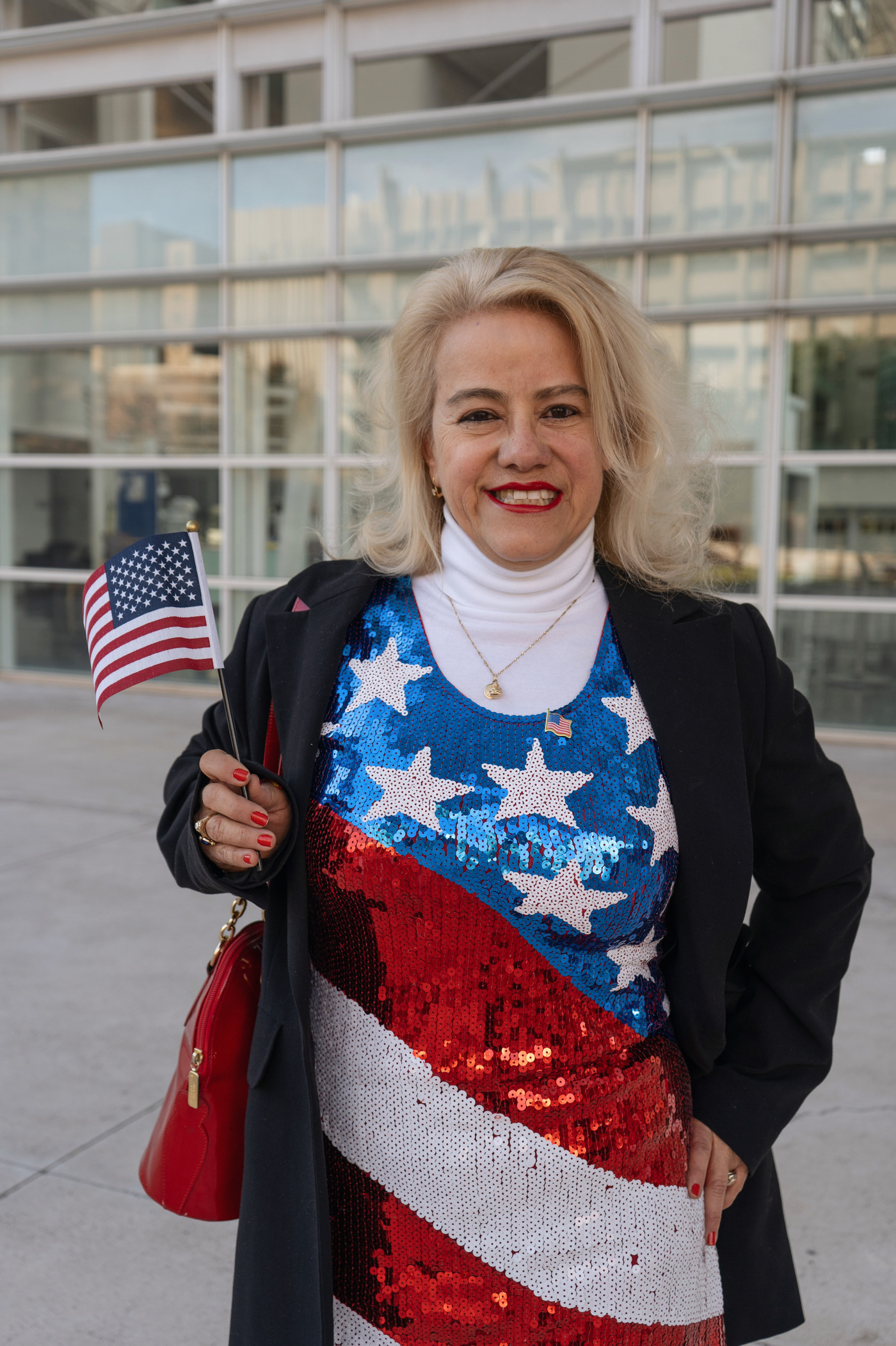
Karen Perez, who is from Venezuela, waves an American flag after the naturalization ceremony.
Grace Widyatmadja/NPR
It’s hard to miss Karen Perez as she walks out of the courtroom wearing a sequined American flag dress.
“Can you see all the flag?” she joked.
Perez, who is from Venezuela, registered and plans to vote next year. When she thinks about issues that are top of mind, immigration is a priority.
“The treatment of immigrants, no matter what country they are from, Central America, Latin America, from the East,” she said in Spanish, “because sometimes some rights are very difficult.”
For Perez, voting is a duty as a U.S. citizen.
“It is deciding my destiny, and because I am now an American citizen, then it’s also the destiny of the nation,” she said. “You do select a president that could rebuild or create a better country for the United States. That’s why you have to vote because if you don’t vote, you can’t complain.”

Adam Modzelewski is originally from Poland and he waited over 20 years to become a U.S. citizen.
Grace Widyatmadja/NPR
hide caption
toggle caption
Grace Widyatmadja/NPR

Adam Modzelewski is originally from Poland and he waited over 20 years to become a U.S. citizen.
Grace Widyatmadja/NPR
It was hard for Adam Modzelewski to contain his emotions when he finally received his certificate during the ceremony. Originally from Poland, he waited over 20 years to become a citizen.
“That’s why I had tears in my eyes,” he said, surrounded by his family.
He told NPR he’s eager to cast his ballot next year.
“I’m hoping finally people [are] going to wake up and start looking somewhere else than [the] Democrat[ic] Party. They [are] not helping nobody,” he said.
He’s disappointed with President Biden’s first term and plans to focus on the Republican candidates and see how the primary field progresses.
“I hope we can make a change,” he said.

Sisters Olga Aguerra (left) and Nancy Tafolla stand outside the Sandra Day O’Connor Courthouse after Aguerra became a U.S. citizen.
Grace Widyatmadja/NPR
hide caption
toggle caption
Grace Widyatmadja/NPR

Sisters Olga Aguerra (left) and Nancy Tafolla stand outside the Sandra Day O’Connor Courthouse after Aguerra became a U.S. citizen.
Grace Widyatmadja/NPR
Olga Aguerra hadn’t yet taken her citizenship test when she decided to buy a ‘USA’ T-shirt at a clothing store.
“I bought it regardless of if I passed or not,” she told NPR in Spanish outside the courthouse. “But now I’ll wear it because I’m proud to live in this country and to be a part of this country.”
Aguerra registered to vote that day. At 53, she’s spent more of her life in the U.S. than in her home country of Mexico.
Thinking about next year, she believes her vote can make an impact. “It’s a little grain of sand within many, many people,” Aguerra said, adding, “You can make a difference.”
“We told her right away … to go register,” said her younger sister, Nancy Tafolla, who became a citizen as a child. “We all live here, and I feel like we all have a voice.”

Brayan Vazquez says registering to vote is a priority for him.
Grace Widyatmadja/NPR
hide caption
toggle caption
Grace Widyatmadja/NPR
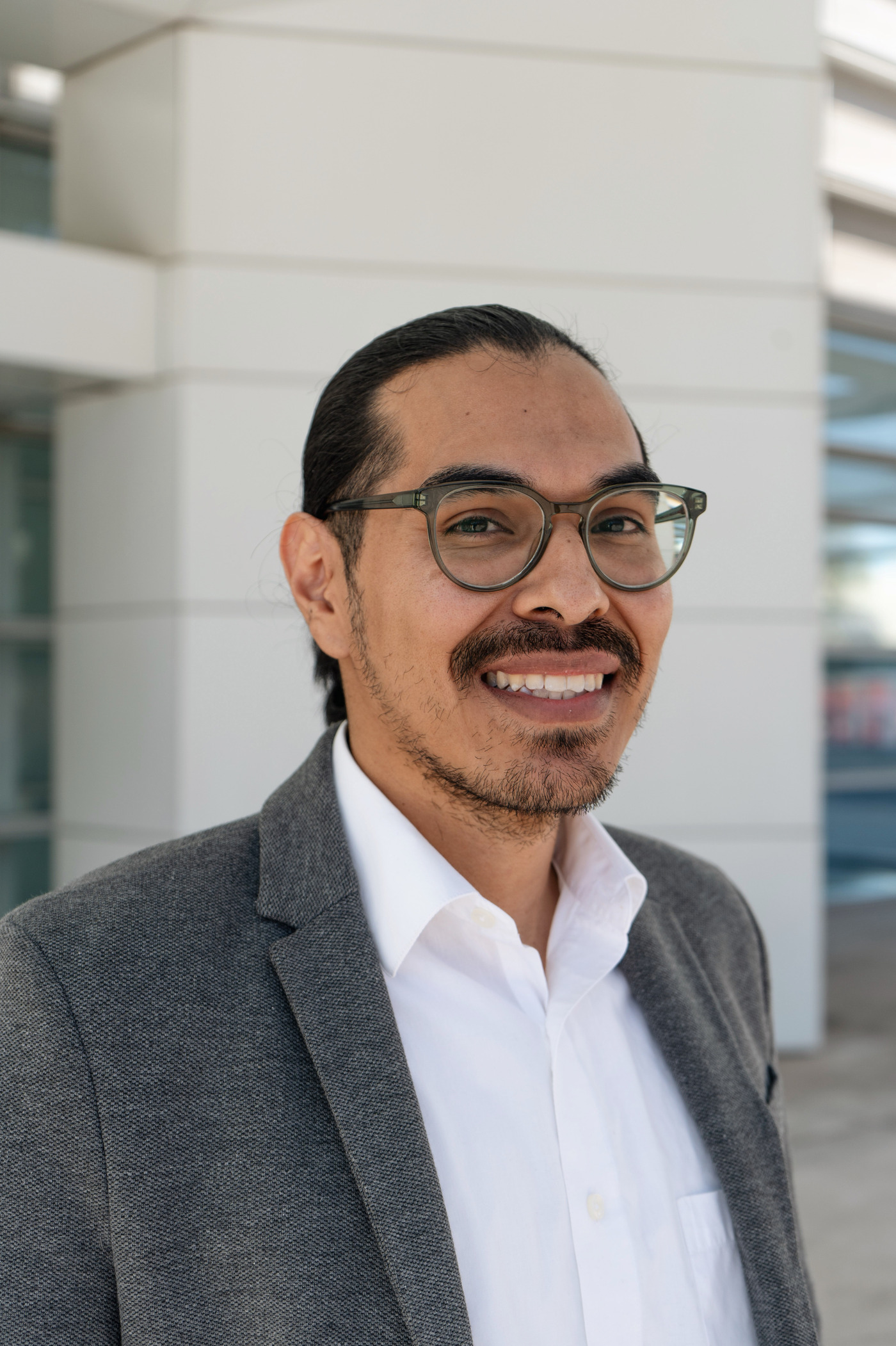
Brayan Vazquez says registering to vote is a priority for him.
Grace Widyatmadja/NPR
For new citizen Brayan Vazquez, thinking about elections isn’t new.
“As a former not only immigrant but undocumented person in the United States, politics have been, you know, overall something that you cannot avoid,” said Vazquez.
Now, registering to vote is a priority for him.
“I think now, for many years, we say, ‘be my vote,’ telling friends and relatives, vote for my interests,” he said. “Now I get the opportunity to really vote for my own interests.”
NPR’s Ximena Bustillo contributed to this report.