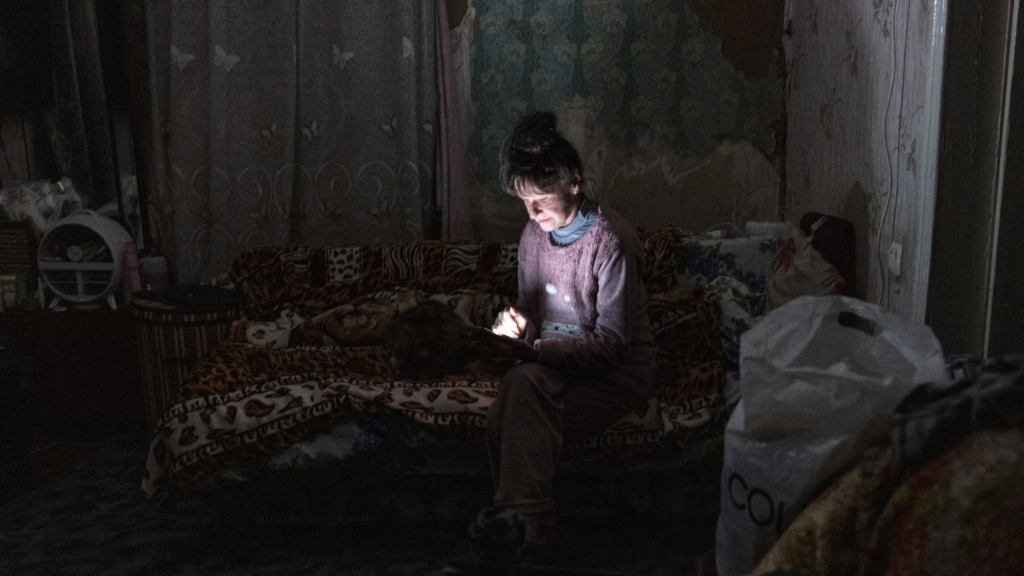
Around the country, people are vandalizing Flock cameras. The surge in this type of activity underscores the widespread resistance to this police surveillance technology.
Transcript
JUANA SUMMERS, HOST:
The company Flock Safety, which makes automated license plate readers that police use to track vehicles, held its annual conference this week. Their product is meeting growing resistance. According to the advocacy group DeFlock, at least 100 cities have deactivated the cameras or canceled their contracts. As NPR’s Meg Anderson reports, some people are so fed up with Flock cameras that they’re covering them up or even destroying them.
MEG ANDERSON, BYLINE: A couple times a week, Brady O’Rourke walks to the busy street near his house in Crystal, Minnesota. He carries a big metal pole with a bright yellow sign taped to the end.
(SOUNDBITE OF METAL CLANGING)
BRADY O’ROURKE: Yeah. This is a roof rake that I’ve never used.
ANDERSON: A roof rake – for those in less wintry climates – is something people use to scrape snow off their house, although he has different plans for this one.
(SOUNDBITE OF CAR HORN HONKING)
O’ROURKE: Thank you.
ANDERSON: When we get to the intersection, we come to a Flock camera. It’s about 12 feet tall. Normally, this camera would record everyone who drives down this street. Not right now. O’Rourke lifts his pole into the air and blocks the camera with his sign.
O’ROURKE: And I’ll just stand here, and I’ll wave to people. And I’ll do it for, you know, 20, 30 minutes.
ANDERSON: As we stand there, some drivers wave back and smile.
(SOUNDBITE OF CAR HORN HONKING)
O’ROURKE: Yep. Thumbs up. I’ll take it.
ANDERSON: O’Rourke is part of a growing movement against automated license plate readers like Flock. According to Flock, more than 5,000 law enforcement agencies use their technology. Every month, those cameras capture billions of license plates and other details about a car. That allows police to see where a driver has been over time – people going to work, to the doctor, to daycare to pick up their kids. Clare Garvie is a privacy lawyer at New York University’s Policing Project.
CLARE GARVIE: What we’ve enabled in practical reality is law enforcement to go back and look at where any of us was at any given point in time.
ANDERSON: She says she wants to see more oversight from lawmakers.
GARVIE: We did not set up a system of governance in this country that says, just don’t do anything wrong, and you won’t have anything to worry about. What we said is, no, actually, law enforcement is affirmatively restricted against getting up in our business as we go about our daily lives.
ANDERSON: Police leaders say Flock cameras help them locate stolen vehicles and missing people, and a recent preliminary study seemed to show that they can deter car theft. But the technology has also been abused. Police officers, for instance, have used it to stalk ex-girlfriends. A sheriff’s office in Texas used it to track a woman who may have had an abortion. That has led some people to take matters into their own hands.
(SOUNDBITE OF MONTAGE)
UNIDENTIFIED REPORTER #1: Police are investigating after a Flock camera was vandalized.
UNIDENTIFIED REPORTER #2: Two Flock cameras were vandalized in Vincent – that’s east of Tucson – over the weekend.
UNIDENTIFIED REPORTER #3: Three damaged automated license plate reader cameras in the city.
ANDERSON: According to an NPR review, Flock cameras have been vandalized in at least 36 states. They’ve been stolen, sawed down, crashed into, covered in paint and stickers, even shot at with guns. Instagram and TikTok are filled with tongue-in-cheek how-to videos, like how to discreetly saw through a metal pole. Garrett Langley is the CEO and co-founder of Flock.
GARRETT LANGLEY: These are people being amped up to go do something. And I don’t think that they’re being given the level of information they should, but they’re also committing a felony.
ANDERSON: Last week, Flock changed some of its features to help prevent abuse. That includes cutting off access to officers who appear to be misusing the tool.
LANGLEY: We are so transparent about the business, right? We don’t own this data. We don’t sell this data. Cities have control over how long it’s stored and who it’s shared with.
ANDERSON: Langley says if people have concerns, they should take it up with their city council. Organizers with DeFlock, which publishes the locations of license plate readers, agree. This week is the group’s National Week of Action. They say more than 25,000 people are registered for events around the country, things like protests and education sessions, which offer people a legal way to use their voice.
Meg Anderson, NPR News.
Copyright © 2026 NPR. All rights reserved. Visit our website terms of use and permissions pages at www.npr.org for further information.
Accuracy and availability of NPR transcripts may vary. Transcript text may be revised to correct errors or match updates to audio. Audio on npr.org may be edited after its original broadcast or publication. The authoritative record of NPR’s programming is the audio record.