A mother summons her three adult daughters home to Indiana in the author’s expertly-crafted fifth novel. Their disparate worldviews come to bear on an outcome that will leave readers holding their breath in anticipation.
Book review
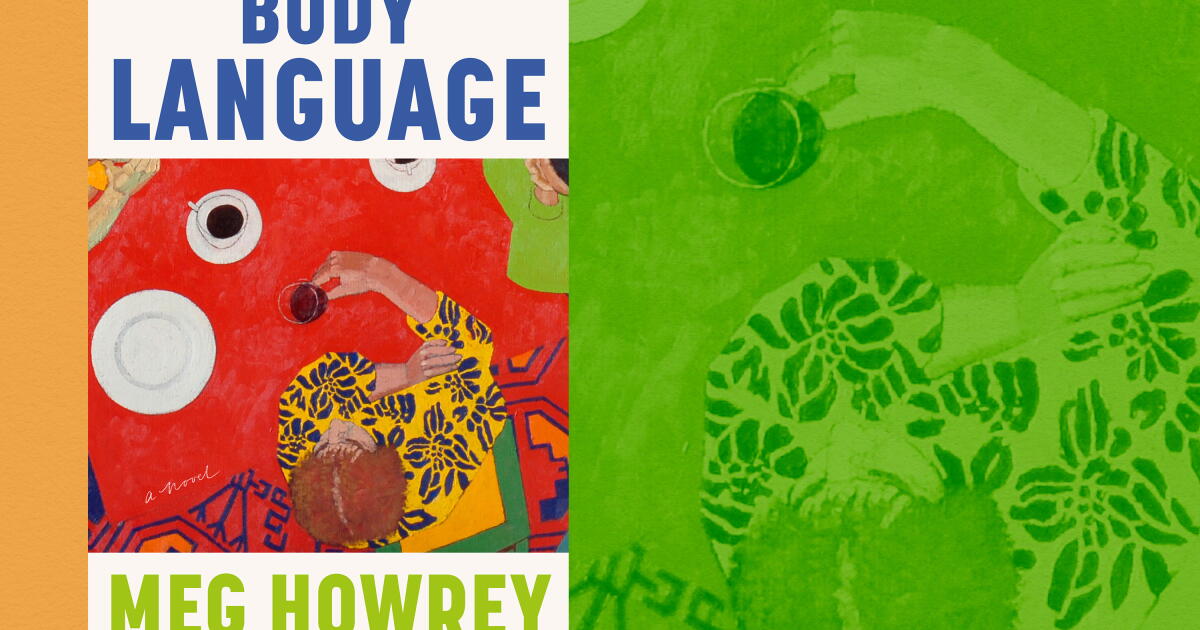
‘Body Language’
By Meg Howrey
Doubleday: 304 pages, $30
If you buy books linked on our site, The Times may earn a commission from Bookshop.org, whose fees support independent bookstores.
As the personal trainers, spiritual leaders and motivational speakers say, “How you do anything is how you do everything.” This bit of wisdom is key to the lyrical character study that is “Body Language,” Meg Howrey’s sardonic, smart and powerful fifth novel.
In alternating, time-traveling, distinctly voiced chapters, the four quirky members of a modern Midwestern family spin on the tilted axis of Barbara, their dementia-impaired matriarch. The precision with which each woman is painted attaches the reader to the characters and the characters to the plot. As is true of the best novels, the story emerges not as a scheme concocted by the author, but as an organic outcome of each character’s growth over the life of the book. Howrey’s own politics are here — feminist, environmentalist, activist — but believably portioned out to her characters.
Sloane, the eldest, is an L.A.-based actor and therapist, a feminist in the throes of menopause. “Perimenopausal brain fog was a real thing, though like nearly every other perimenopausal symptom it was tricky to distinguish from about a hundred other medical conditions,” Sloane tells us. “Women had needed to prove they could have their periods … and fly planes, perform surgeries, run governments. They still had to do this.”
Laurel, 45, works at a Seattle environmental nonprofit. While mothering her two teenagers, one of them newly identifies as nonbinary — “It was Laurel’s job to not make a big deal about this” — she obsesses about her husband’s questionable fidelity. “In her socioeconomic group they were all Cool or Hot Moms. Some of her friends liked to call themselves Bad Moms, which was a way of boasting how you weren’t an over-engaged, hypervigilant, insufferable type of mom.”
Nun-novice and anti-gun violence activist Nanette, 35, has been carrying her mother’s secret for five years, not knowing whether one or both of her sisters had been entrusted with it too. “If it happens and I don’t seem to know it,” Barbara had told her youngest, “then you have to say, ‘Mom, you have Alzheimer’s and now you need to do what you planned’ … Sometimes you hear people say, ‘Oh, put me on an ice floe and shove me out to sea. They don’t have a plan. I have a plan. I mean it.’”
The book opens shortly after its precipitating event. Barbara has summoned her three daughters to her suburban Indiana home, saying she needs their help. Only when they arrive from their various locales, carrying their various loads of secrets, generosity and resentments, do the daughters discover what kind of help their mother wants. Barbara has cast her offspring in a command performance as the assisters in her assisted suicide.
How will each of Barbara’s daughters respond to her mother’s wish to die? The way they do everything, of course, as evidenced by the siblings’ meeting in their mother’s garage, attempting to resolve their seemingly irreconcilable differences about their mother’s fate and their parts in it. Anyone who’s lived the hell of a parent’s descent into Alzheimer’s will recognize the whiplash of intermittent lucidity when Sloane tells Barbara, “We just have some things to do in the garage,” and Barbara snaps back, “I can be alone for ten minutes. You don’t have to make things up.”
And anyone who’s ever been a sibling in a family crisis will recognize the dynamic of that meeting. Three sisters, three clashing opinions, limitless wrath. No one of them can be right without the other two being wrong.
Sloane held out the envelope of pills. “Just to be clear, Nanette. You think Laurel and I should leave, and you should give Mom these.”
“No,” Nanette said. It wasn’t that Nanette disagreed. It was wrong to hurt yourself, because everything about you was God’s wish. But God had made her mother as she was, and the person she was wanted to die.
“She could just end up in a coma,” Sloane said.
“There are ones for nausea and ones that will put her to sleep and ones that will stop her heart,” Laurel explained.
“So you agree with Nanette’s plan?” Sloane says.
“None of us can do it,” Laurel said. “It’s illegal. We could go to jail.”
“I don’t care about that,” Nanette said. “I answer to a higher authority.”
“All their lives,” Sloane thinks, “women had to fight for rights over their own bodies … Even now, women had to form a secret coven, in a garage in Indiana, to help another woman exercise her choice.”
“Mom had a plan,” Laurel says. “She told herself, ‘Oh, just put me on an ice floe —’”
“Soon no one will be able to say that,” Sloane says. “Because the ice floes will all have melted.”
There are novels about the ties that bind wildly disparate sisters (“Little Women” comes to mind) and novels about women contemplating suicide (Sylvia Plath’s “The Bell Jar”) and novels about grown daughters making pilgrimages to their aged mothers (“Tom Lake” by Ann Patchett). There’s the novel adapted into a movie, “Still Alice,” about a female Alzheimer’s sufferer contemplating suicide, and there are novels that use humor to satirize dead-serious social issues (“Pride and Prejudice,” “Catch-22,” “James” by Percival Everett).
What Howrey delivers with “Body Language” is a novel that covers all that ground while keeping the reader on the edge of their seat, alternately howling with laughter, holding their breath awaiting resolution, and weeping. We can only hope that the way she did this book, with her finger on the pulse of all that moves us, is the way she’ll do the next one.