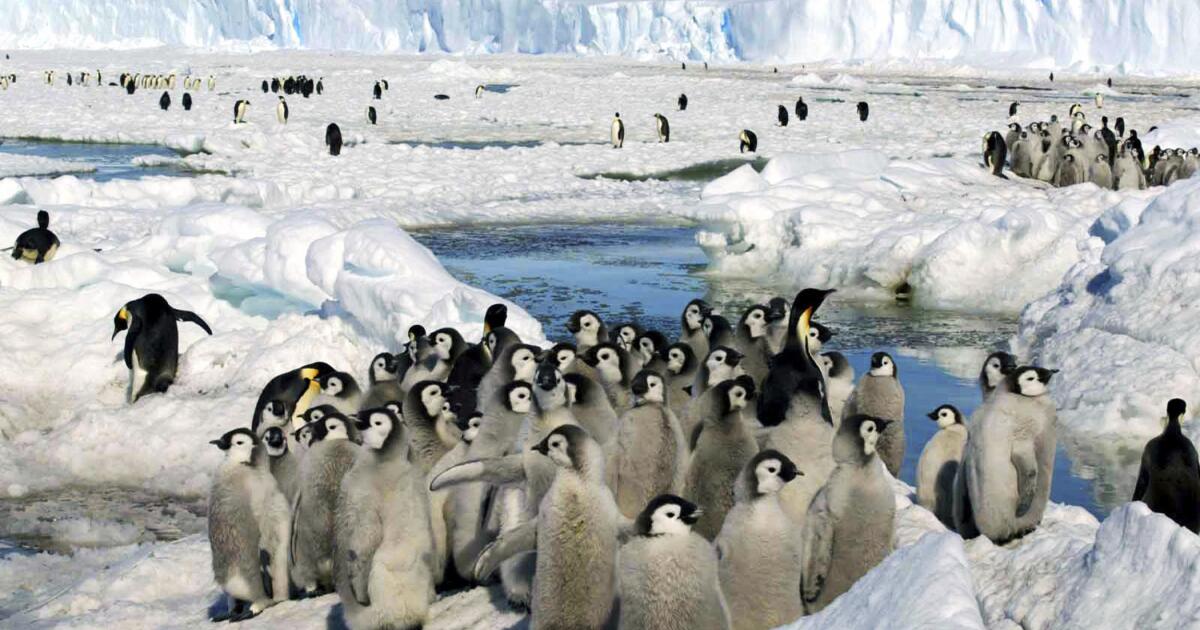
Antarctica’s iconic emperor penguin has been deemed an endangered species as the sea ice it depends on shrinks because of rising temperatures.
The penguins’ population is expected to drop by half by the 2080s because of a loss of sea ice, which the birds use for breeding, the International Union for Conservation of Nature said Thursday. The population already fell by about 10% between 2009 and 2018, the equivalent of around 20,000 adult penguins, according to analysis of satellite images.
Emperor penguins are among the ice-dependent species struggling to survive as the planet warms, IUCN scientists said. The birds breed on ice that is connected to something stable, like the coastline or ocean floor. But since 2016, that sea ice has been retreating to record-low levels, raising the risk of chicks being lost to the ocean before they can safely swim.
“Early sea-ice break-up in spring is already affecting colonies around the Antarctic, and further changes in sea-ice will continue to affect their breeding, feeding and moulting habitat,” said Philip Trathan, a member of the IUCN species survival commission penguin specialist group, in a press release.
Emperor penguins were previously considered “near threatened” by the Switzerland-based IUCN.
The update to the IUCN’s Red List, a catalog of species at risk of extinction, also adds the Antarctic fur seal to the endangered category after its population declined by more than 50% between 1999 and 2025. Less food is available for the seals as warming oceans push the krill they feed on deeper in search of cooler water.
Rudgard writes for Bloomberg.