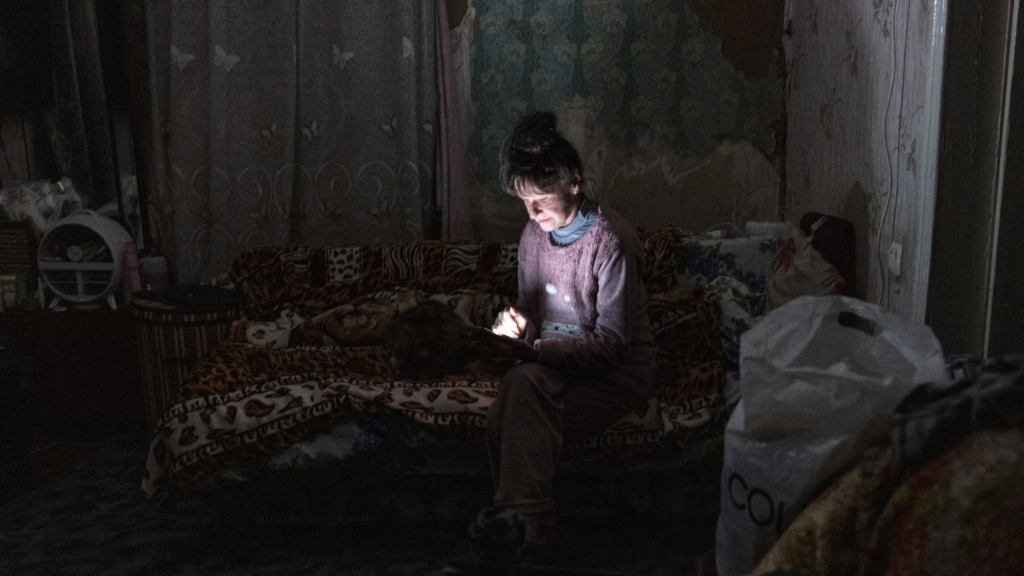
Test strips can identify dangerous hidden additives in street drugs and help prevent overdoses. But the Trump administration says federal funds can’t be used to provide the strips to drug users.
Transcript
SACHA PFEIFFER, HOST:
Local health departments and nonprofits that provide addiction services rely on test strips for so-called harm reduction. People use the strips to see if a street drug also contains a more potent or dangerous chemical that could lead to an overdose. In late April, the Trump administration sent those organizations a letter that shocked them – specifically, the part of the letter that talks about test strips. Scott Maucione at member station WYPR has more.
SCOTT MAUCIONE, BYLINE: Last year in Baltimore, there were three incidents in which multiple people overdosed at the same time after taking the same drug. Dozens of people were found unresponsive lying in the streets or on sidewalks. No one died, but many came close. Eventually, the city traced the problem back to an adulterant in the opioid supply, one the city had never seen before. Candy Kerr of the Baltimore Harm Reduction Coalition says her organization now passes out test trips to help drug users identify that specific adulterant.
CANDY KERR: This horrible event that happened as, like, a direct result is that we now know that we need tester strips for this specific thing so that we can continue to make sure people are safe.
MAUCIONE: Free test strips can be found in bars and on street corners. They hand them out at clinics and neighborhood events. But now Kerr’s afraid that will be hard to do. That’s because the Substance Abuse and Mental Health Services Administration announced that federal funds can no longer be spent on giving strips to drug users. The agency’s letter explained that the strips might encourage people to use illicit drugs. Test strips have been developed for a range of substances like xylazine, an animal tranquilizer. Dealers sometimes mix it with opioids, but it can cause dangerous reactions and severe skin wounds.
In an email, a Health and Human Services spokesperson said they want federal funding to be used for other strategies, like distributing naloxone, a nose spray that can reduce an overdose. The email also pointed out that federal funds can still be used to buy strips for police and health workers. Dr. Yngvild Olsen previously worked on drug treatment issues both under President Biden and Trump. She says research shows that handing out test strips reduces risky behavior.
YNGVILD OLSEN: So some people deciding not to use the substances, some people deciding to use less or take other types of precautions, including naloxone and, you know, making sure that there are people around that can actually even help in the case of an overdose.
MAUCIONE: Kerr of the Baltimore Harm Reduction Coalition says groups like hers are scrambling to revise their budgets.
KERR: And also, like, we’re going to have to pull money from other places – right? – like, ’cause we’re not going to stop giving people tester strips, right?
MAUCIONE: She says, to pay for the strips, they’ll have to spend less on things like giving out hygiene and wound care kits. For NPR News, I’m Scott Maucione in Baltimore.
PFEIFFER: That story came from NPR’s partnership with WYPR and KFF Health News.
(SOUNDBITE OF EDDIE HENDERSON’S “INSIDE YOU”)
Copyright © 2026 NPR. All rights reserved. Visit our website terms of use and permissions pages at www.npr.org for further information.
Accuracy and availability of NPR transcripts may vary. Transcript text may be revised to correct errors or match updates to audio. Audio on npr.org may be edited after its original broadcast or publication. The authoritative record of NPR’s programming is the audio record.