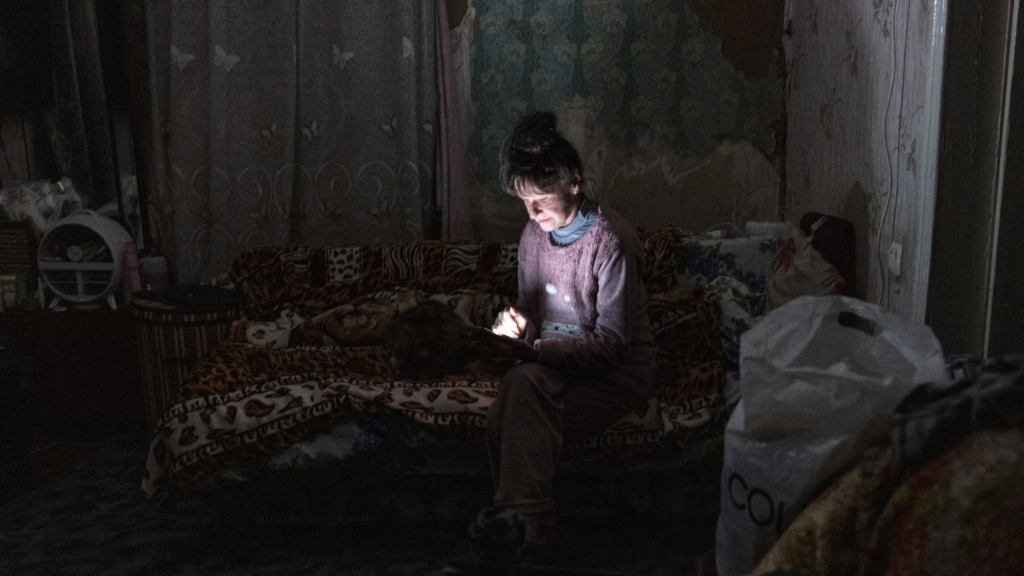
It’s probably going to cost more to heat your home this winter. Forecasters say heating bills are likely to climb faster than overall inflation, despite what’s expected to be a relatively mild winter.
Transcript
LEILA FADEL, HOST:
The cost of staying warm this winter could give some people the chills. A new forecast says the average family will spend more than a thousand dollars to heat their homes through the winter. In some parts of the country, winter heating bills could be more than twice that high. The news comes on the heels of what was already a costly summer for air conditioning. NPR’s Scott Horsley joins us now to talk about this. Good morning, Scott.
SCOTT HORSLEY, BYLINE: Good morning, Leila.
FADEL: What’s making this upcoming winter so expensive? Is it the weather?
HORSLEY: No. In fact, weather forecasters say this could be a relatively mild winter for much of the country. We’re still in the grip of a strong El Nino weather pattern, which also contributed to our very hot August. And El Nino is expected to peak in November and December, which is projected to keep temperatures above average in much of the U.S. into early next year. Mark Wolfe, who heads a group of state officials who help low-income families with their utility bills, says, ordinarily, those milder temperatures might give people a break on winter heating bills and allow them to catch up after a costly summer of trying to stay cool.
MARK WOLFE: If this was a typical year, I would tell you the outlook is good. We’re expecting warmer weather, which helps to push down prices because people don’t use as much. But this year is different.
HORSLEY: And it’s different because of rising energy prices. Even though people may not need to run their furnaces as much this year, their heating bills could still be higher than last year just because fuel is more expensive.
FADEL: How much more expensive?
HORSLEY: On average, Wolfe’s group is projecting that heating bills will be eight or 9% higher this year than last. But there’s a lot of variation depending on where you live and how you heat your home. Most families in this country heat with either natural gas or electricity, and the price of both is going up faster than inflation overall. Electric heating bills tend to be higher to start with, so the dollar increase could be larger for those who use electric heat. But the people who could really see a spike this winter are families who rely on heating oil. That’s not real common nationwide, but it’s still widely used in the northeast.
WOLFE: You get into New England, you see 30%, 40%, much higher numbers. So it’s a specialty fuel that’s used in that part of the country. And so those families are already getting hit with high gasoline prices. Now we’re looking at getting hit with significantly higher heating costs.
HORSLEY: Heating oil is a close cousin of diesel fuel. And, of course, we’ve been talking about diesel prices soaring to record highs. AAA says the average price of diesel today is $6.23 a gallon. And as a result, Wolfe says customers who rely on heating oil could see their bills jump more than 30% this winter.
FADEL: How much of a financial hardship is that?
HORSLEY: It’s toughest on those families that can least afford it. You know, people in the bottom fifth of the income ladder typically spend almost 10% of their income on utility bills. So any increase can be really challenging. The federal government does offer some assistance to help low-income families with their heating bills. But Wolfe says the funding for that program has been basically flat for the last three years. And as the heating price goes up, the help just doesn’t stretch as far as it used to.
WOLFE: We keep making the point that cost of home heating in the last five years has gone up by almost 24%, and federal funding hasn’t. So how do we help families pay these bills?
HORSLEY: Middle- and upper-income families can usually weather higher heating bills more easily. But most of the state energy officials, energy assistance officials, are increasingly getting requests from even better-off families, who say they’re also struggling with the rising cost of staying warm in the winter or cool in the summer.
FADEL: NPR’s Scott Horsley. Thank you, Scott.
HORSLEY: You’re welcome.
(SOUNDBITE OF THEE SINSEERS AND JOEY QUINONES SONG, “LIKE I CAN GIVE”)
Copyright © 2026 NPR. All rights reserved. Visit our website terms of use and permissions pages at www.npr.org for further information.
Accuracy and availability of NPR transcripts may vary. Transcript text may be revised to correct errors or match updates to audio. Audio on npr.org may be edited after its original broadcast or publication. The authoritative record of NPR’s programming is the audio record.