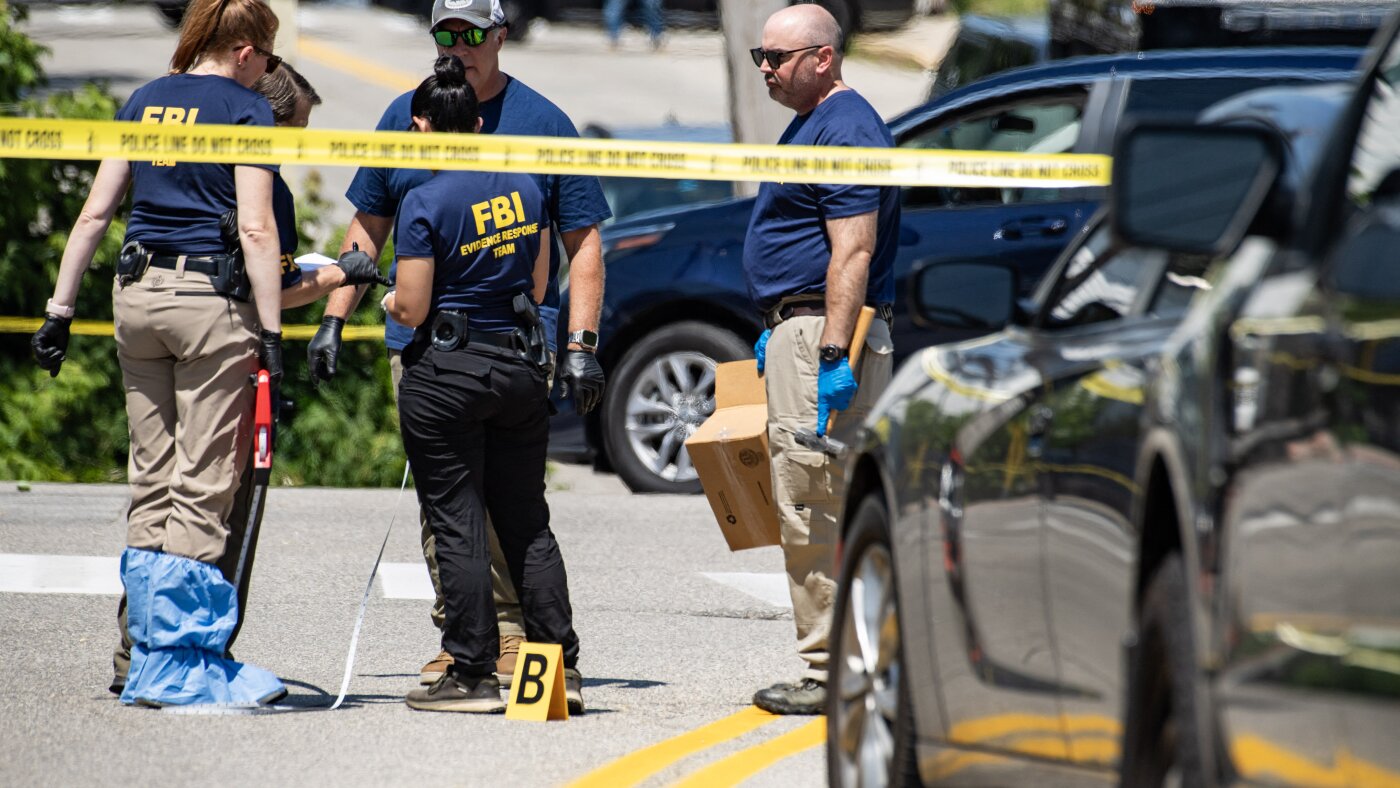
FBI investigators work the scene of an alleged ICE involved shooting in Biddeford, Maine, on July 13, 2026.
Joseph Prezioso/AFP via Getty Images
hide caption
toggle caption
Joseph Prezioso/AFP via Getty Images
U.S. Immigration and Customs Enforcement will pause non-urgent vehicle stops after two deadly shootings in less than a week, Maine Sen. Angus King’s office tells NPR.
King’s spokesman Matthew Felling says the Department of Homeland Security confirmed the policy shift. Maine Sen. Susan Collins also posted on X Tuesday that she had called for change.
“I spoke with DHS Secretary Mullin last night and urged him to cease all non-urgent vehicle stops,” she wrote.
DHS told NPR in a statement that it will not “disclose or discuss law enforcement tactics,” and it’s unclear what this change will look like in practice.
The most recent death happened Monday in Biddeford, Maine, where ICE agents tried to pull over the car of 26-year-old Joan Durán Guerrero, a Colombian national.
“The vehicle attempted to flee the scene and fearing for public safety an officer discharged his weapon,” DHS said in a statement. However, the agency has not provided any evidence to back the claims. The agents were not wearing body cameras.
Last week, Lorenzo Salgado Araujo was shot by agents in Houston after they attempted to pull him over. The Department of Homeland Security says Salgado Araujo tried to use his van as a weapon, prompting an agent to fire their weapon. But passengers in the van have disputed this account.
Paul Hunker, the former chief counsel of ICE in Dallas, told NPR the standards and principles of when to discharge a firearm are clear.
“I was an attorney for the officers — the person has to pose an imminent threat of harm to use deadly force,” Hunker said.
He said whether the person poses an imminent threat is always from the perspective of the officer.
DHS Policy
The Department of Homeland Security’s policy says deadly force cannot be used solely to prevent someone from fleeing … unless the person poses a significant threat of death or serious physical harm to the agent or others.
DHS accused Salgado Araujo of weaponizing his car against the ICE officer. In Maine, the agency said Durán Guerrero posed a public safety threat.
But in these cases, there hasn’t been video evidence to back up those allegations.
The latest development has been welcomed by former DHS officials who said a reset is needed in order to regain the trust of the public, and ensure no more lives are lost.
“That person could flee and present a big danger to people around them … that’s one of the reasons I think there are few vehicle chases because of the danger and the harm that could happen if one of those goes bad.” Hunker said.
He said in the past, ICE’s preference has been to assume custody of the undocumented immigrants who were already in jails, making it safer for the agents.
Sarah Saldaña, a former ICE acting director under President Obama, said the shift in policy is a good start.
“I think it’s a very practical thing to do until the agency can get its officers more properly trained and attuned to what their effort is,” Saldaña said. “Immigration enforcement should not be a deadly endeavor — it should be a method by which to make sure that people are complying with the law.”
Despite the shift in policy, there are a lot of outstanding questions about what led to the fatal shootings of Salgado Araujo in Houston last week, and of Durán Guerrero in Maine this week.
None of the federal immigration agents were wearing body cameras, according to the Department of Homeland Security.
After the shooting of Renee Good and Alex Pretti in Minneapolis in January, DHS vowed to quickly deploy body cameras to federal immigration agents nationwide.
But that hasn’t happened.
The agency is blaming Democrats in Congress and the partial government shutdowns for this. But it is, again, vowing to deploy body cameras for all agents in the next 60 days.
That footage would have been key to knowing whether the agents followed protocol or not, and to hold the agents accountable, said Lauren Bonds, the executive director of the nonprofit National Police Accountability Project.
“Luckily in both instances there were witnesses, independent witnesses, that observed some things and were able to share some information,” Bonds said. “But it’s really hard to be able to hold ICE agents accountable in any manner if all we’re getting from DHS right now is kind of vague statements about the car being used in a way that was either threatening the ICE agents or, in the case of Maine, threatening the public.”
Bonds said the public needs to keep demanding answers and independent investigations to create a change in policy — like the pause on traffic stops made public Tuesday.
NPR’s Meg Anderson contributed reporting.