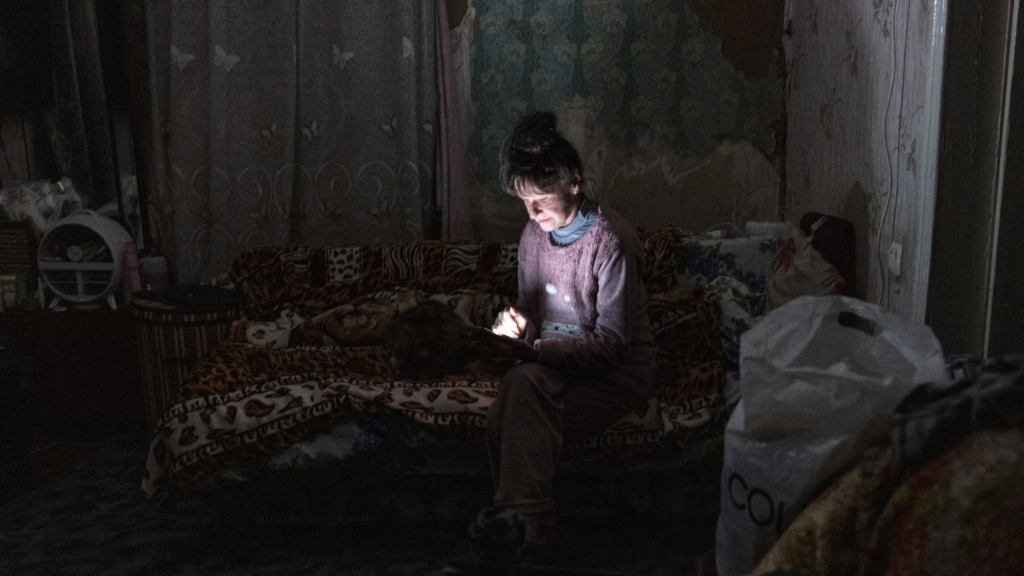
Rain has been seeping into an Internal Revenue Service building in Atlanta through leaks in the roof that have gone on for years. The mold in Veterans Affairs work spaces in Hilo, Hawaii, got so bad that visitors complained. And on any given day, people in an Oakland, Calif., federal building are at risk of getting stuck in one of its outdated elevators.
Across the federal government, employees are working in buildings that have persistent health and safety problems, in part the result of decades of backlogged maintenance that totals as much as $50 billion, according to one recent estimate by an oversight board. In several years, the cost is set to exceed the entire value of the federal government’s real estate portfolio, the Public Buildings Reform Board said earlier this year.
The health and safety risks were exacerbated last year by the Trump administration’s push for federal workers to return to the office, forcing more employees into buildings whose longstanding needs had gone unaddressed for years.
Unlocking money for repairs is a lengthy and bureaucratic process. Under federal law, Congress must approve major improvements to buildings run by the General Services Administration that total more than $3.96 million — an amount that would cover the cost of replacing just three elevators at a time when the government needs to replace dozens.
The approval process takes an average of 435 days, the G.S.A. said, and in many cases even longer, meaning costs balloon as problems fester.
A project to replace the roof and HVAC systems and update the electrical system of the John F. Kennedy Federal Building in Boston has increased by more than 400 percent since it was first presented to Congress in 2016, according to the G.S.A. Since the 24-story building was first flagged for improvements, it has developed additional problems with its elevators, which are more than 30 years old and have entrapped people at least 49 times in the past two years.
Meanwhile, less costly maintenance needs across the government have piled up amid a focus on issues that could be life-threatening, according to federal employees and government officials.
“This isn’t just an accounting exercise,” Edward C. Forst, the head of the General Services Administration, told Congress in March. “This represents real buildings deteriorating and real safety hazards developing when we do not address problems when they arise.”
The conditions affect not just federal workers, but also members of the public who routinely visit the buildings for services such as veterans and Social Security benefits.
In May, Mr. Forst and leaders of 21 federal agencies asked the top Republicans and Democrats in the House and Senate to change the appropriations process and give the G.S.A. full access to the federal buildings fund, and to raise the threshold for how much the agency can spend.
So far, the lobbying effort has not had an impact, and Congress has kept in place the oversight requirement for the G.S.A. to submit detailed requests for projects exceeding $3.96 million. Mr. Forst asked Congress to raise it to $75 million.
Dan Mathews, a former head of the G.S.A. division that manages real estate, said that it was unlikely that Congress would change the law, in part because the state of federal buildings gets little attention. For lawmakers of both parties, spending money on government itself rather more tangible services for voters is not a top priority.
“It doesn’t fall that high, and it never will,” said Mr. Mathews, now a member of the reform board, which was set up a decade ago to identify federal properties that can be offloaded. “Government is a terrible owner of real estate.”
Worsened by the pandemic
The G.S.A., which serves as the landlord for civilian government agencies, owns about 1,475 buildings and properties in all 50 states and the District of Columbia, Puerto Rico and the U.S. Virgin Islands, according to the agency’s online inventory. On average, the buildings are 50 years old. The estimated $50 billion maintenance backlog involves a range of projects, including roof repairs and replacements, fixes to heating and cooling systems, electrical upgrades and asbestos remediation.
In its budget request for 2027, the G.S.A. identified a dozen buildings with the most urgent need of repairs, including seven federal courthouses. Some have been on the list for multiple years.
The decline and decay has been decades in the making, but the coronavirus pandemic created new problems. Many federal offices sat empty for years as employees moved to remote work. Water lay stagnant in pipes. Flora and fauna moved in. HVAC filters went uncleaned and unrepaired. Mold grew.
Employees began to return in 2022, but many agencies allowed some remote work flexibility. Last year, Mr. Trump ordered all federal workers to return to the office as soon as possible, and directed managers to terminate remote work arrangements.
Many employees returning to the office encountered problematic conditions. Water at the Food and Drug Administration headquarters contained Legionella, the bacteria that causes Legionnaires’ disease, a dangerous type of pneumonia, according to the G.S.A.’s website. The website also says buildings with the bacteria can be safely occupied, with “appropriate control measures.” Legionella can develop in water when plumbing fixtures go unused for a period of time. The Centers for Disease Control and Prevention says that there is no safe level.
“Coming out of Covid, you had so many water systems that were just sitting with stagnant water in them that you’ve started to get a buildup of all kinds of unfortunate things, like Legionella,” Brian Gibson, G.S.A.’s deputy assistant inspector general for real property audits, said in an interview. “It’s a risk. It’s a problem.”
An F.D.A. spokeswoman said the most recent test for Legionella, which was in May, came back negative.
The Mazzoli Federal Building in Louisville, Ky., has also had longstanding problems with Legionella in its water, according to an employee in the building familiar with the matter who spoke on the condition of anonymity to avoid retribution, like others who described their working conditions.
Records obtained by The New York Times show that laboratory tests found Legionella in building water fountains and sinks in 2024 and 2025. To this day, there are signs around the Louisville building advising that Legionella has been detected in the drinking water, according to the worker. The G.S.A. did not respond to questions about the Mazzoli building.
Some buildings were in even worse condition. The G.S.A. had to lease new space for some of its employees because 40 percent of its headquarters was deemed unsafe, largely because old radiators and window air conditioning units did not meet air quality standards for ventilation, the agency said.
Despite months of internal complaints, mold festered inside the Veterans Affairs offices in Hilo, Hawaii, for so long that when it was finally evaluated at the beginning of this year, an employee was told to not work in proximity to it, according to a person familiar with the situation. The G.S.A. said that the problem had been resolved, and that the space was safe.
Jordan Barab, a deputy assistant secretary of labor for the Occupational Safety and Health Administration from 2009 to 2017, said that mold, bad water and animals in federal buildings were the kinds of problems that could fall through the cracks.
“They don’t hit the headlines like somebody falling off a building or a huge explosion,” he said. “But workers have a right to have a safe workplace.”
The federal government’s own regulatory agency for safe and healthy working conditions has flagged problems at facilities across the country.
In St. Paul, Minn., the federal government notified the Army Corps of Engineers about an infestation of stinging insects, including wasps and hornets, on the 11th floor of the building where the government leases office space, according to a Jan. 7 letter from the Occupational Safety and Health Administration.
The Army Corps of Engineers said the OSHA case was closed on June 9, and the issue appears to be resolved.
‘Multiple screams a day’
The employees who work at two I.R.S. buildings on the Chamblee campus in Atlanta had a rough spring.
In one of the buildings, workers have been greeted by rats struggling to escape glue traps that have been placed in the middle of their work space.
“It’s multiple being caught a day,” said Sydney Monger, who worked in accounts management in the building until May 29, when she quit, in part because of the rats. “It’s multiple screams a day just on our floor.”
Rat infestations can cause serious health problems, including the transmission of diseases through their urine, droppings and saliva.
In another I.R.S. building on the Chamblee campus, a leaky roof has worsened without repair. When it rains, a makeshift catheter-type contraption of plastic sheeting, hoses and trash cans is attached to the ceiling in parts of the building to direct the rain water into a receptacle.
After a local news report on the rodent complaints and a recent protest by workers, Mr. Forst and the chief financial officer for the I.R.S. visited the campus on June 15 to see the problems for themselves. They decided the situation warranted an aggressive plan, the G.S.A. said, adding that pest management found evidence of mice, not rats.
The agency described the leaky roof as an urgent situation, and said it was using funds to fix it in a piecemeal approach so it did not have to wait for Congress to approve the project funding.
In Austin, I.R.S. employees who work in a leased building have described broken revolving doors at the building’s entrances, out-of-service bathrooms, poor ventilation and leaks that some said have caused headaches, according to an employee. The employee complained of having itchy eyes after entering the building.
Earlier this year, the city documented sewer gas escaping from a drain in one of the men’s bathrooms, which could explain a rotten egg smell workers have reported.
In early April, Austin city officials found 105 code violations in the building, including exposed wiring, improperly installed HVAC units on the roof, broken drinking fountains, leaky faucets and equipment installed without permits. The G.S.A. said that the odors in the building had been addressed, and that other fixes were slated to be completed by October.
Some problems have festered for so long that earlier this year, the federal judiciary asked Congress to take over the management of its buildings that were deeply in need of repair, because the G.S.A. had not been able to do it fast enough.
The cost of the federal maintenance backlog could now total as much as $50 billion, and is on track to cost more than the value of the federal government’s entire real estate portfolio by 2030, according to the Public Buildings Reform Board, which was created to identify properties to be sold.
Full access to the federal building fund will not solve the problem, said the board, which has urged the government to sell underused buildings that have massive deferred maintenance costs.
“The bottom line is that the system is working against the American taxpayer,” Nick Rahall, a board member and former Democratic representative from West Virginia, said on Thursday during a public hearing. “The maintenance backlog translates into unhealthy and sometimes unsafe work environments for our federal employees.”