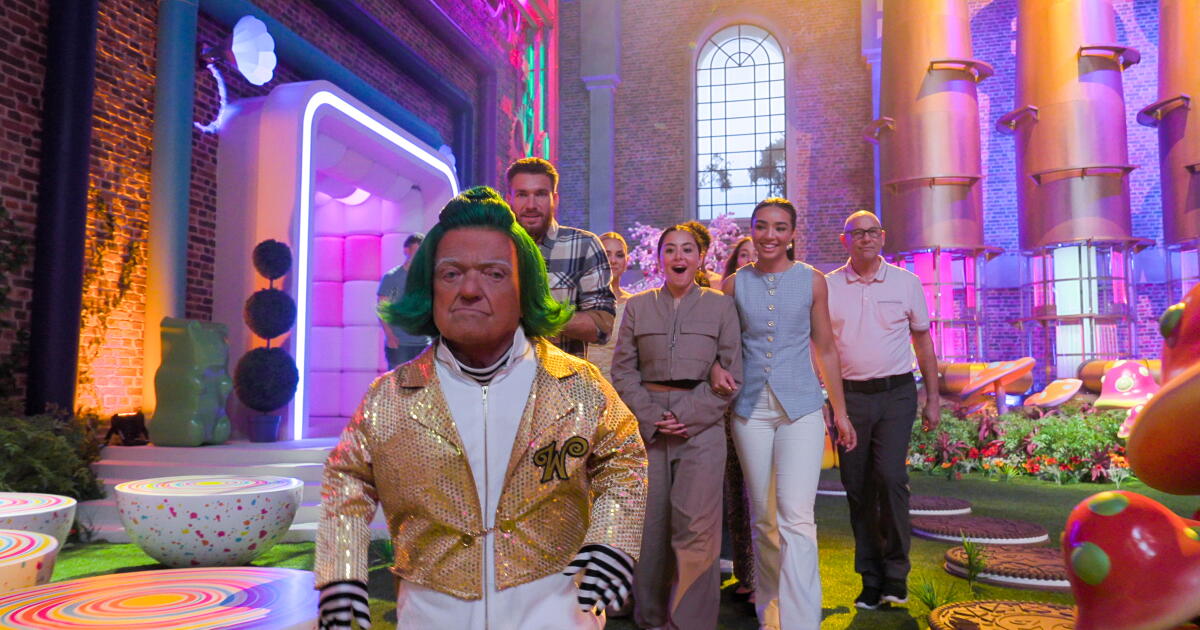
So they’ve turned “Willy Wonka and the Chocolate Factory” — which is not to say “Charlie and the Chocolate Factory,” the 1964 Roald Dahl novel from which the 1971 movie was extruded — into a reality competition series called “Wonka’s the Golden Ticket,” premiering Wednesday on Netflix. Another way of saying this is that they’ve found a new way to dress up “Survivor,” the original — and, heaven help us, still running — task-based themed elimination show.
Thanks to home video and cable TV, the film, not accounted as a success in its time, has become lodged in the childhood memories of several generations. (Cards on the table, I am more a fan of the book than the movie, or of any of the subsequent screen takes.) The most newsworthy aspect of “The Golden Ticket,” besides being the first children’s book to become a reality show, is that it employs an AI rendering of the voice of the late Gene Wilder, who played Wonka in the film, as a narrator, guiding the competition from whatever server it has been stored in. I will waste no time in telling you that the effect is terrible, a lifeless voice not so much from beyond the grave as buried in it.
The pretense is that the contestants, who have not randomly received a Golden Ticket, are being given a tour of the Wonka factory, at the end of which one lucky tourist will receive “a lifetime supply of money.” Like Charlie Bucket visiting the Wonka factory with Grandpa Joe, they come in pairs, though one partner may be separated from the other before the end — “terminated from the tour” — depending on how the chips, or gumballs or licorice twists, may fall.
The exterior of the Wonka factory located in Australia, where the series was shot.
(Netflix)
Contestants’ backstories are provided to make you care for some; others show themselves to be less sympathetic. That these sort of games, with their duplicity, hypocrisies and teary moments of tenderness, are popular is beyond question, and that is certainly how viewers are invited to watch. For those who are tired of such narratives, the appeal of the show will be in its interpretive stagecraft, which is impressive and clever. A couple of big old buildings in Australia have been converted to represent the factory, with a Wonkavator and a chocolate river, along which a slow-moving boat ferries players to and from the main set, where “everything is eatable.”
There are all sorts of giant gadgets for the games, which might involve skill or stamina or being smart and involve a giant gumball machine or lickable wallpaper, per the book and movie. There are Oompa-Loompas of various sizes, including Rusty Goffe, from the 1971 film, who perform Oompa-Loompa dances and sing Oompa-Loompa songs and are seen offstage pushing buttons and pulling levers. (Peter Ostrum, the movie’s Charlie, makes a cameo in a quick cutaway — apparently he no longer runs the factory.) The contestants stay in a candy-themed dormitory, where they will whisper their thoughts, strategic and emotional. (“I love Brad with all my heart but I don’t think he’s in the right mindset right now.”)
Unlike the children in the book — well, for one thing, they are not children — they are not punished for being bad, but only for losing at whatever games the series proposes. Not that, as with any reality show, there aren’t lessons to be learned about human behavior, or relearned, since they are almost always the same lessons. Teamwork makes the dream work, until it doesn’t.

